
What is referral marketing? This is a question you’ve likely asked or come across while looking for effective ways to grow your ecommerce business. And that’s for good reason! It’s one of the most powerful ways to expand your reach and attract new customers to your store.
Referral marketing allows you to tap into the connections of customers who already love your business. By encouraging and rewarding happy shoppers to spread the word, you build trust faster and grow through authentic recommendations.
In this article, we’ll walk you through the basics of referral marketing, break down the most common types, and share simple strategies to help you launch with confidence. Let’s get straight into it!
What Is Referral Marketing?
Referral marketing is a promotional strategy that encourages existing customers to spread the word about your business to people they know, typically in exchange for a reward. Depending on how your referral system is set up, these incentives can be discounts, points, store credits, or even cash rewards.
What makes referral marketing powerful and effective is the trust factor. Shoppers are more likely to check out a product or business when it’s recommended by someone they know. In fact, according to a 2021 global survey, personal recommendations from friends and family were the most trusted advertising channel for consumers.
For ecommerce store owners, referral marketing offers a practical and cost-effective way to grow without relying solely on ads or aggressive sales tactics.
Common Types Of Referral Marketing
Now that we’ve answered the question “what is referral marketing?”, it’s time to explore how it looks in practice. Depending on your store’s goals, target market, and tools, there are several types of referral marketing systems you can explore. Let’s check them out below:
1. Direct referrals
Direct referrals are the most straightforward and authentic form of referral marketing. This happens when customers recommend your store and products to people they know out of genuine appreciation and satisfaction. While they don’t typically involve a reward, direct referrals can be incredibly effective because they feel natural and trustworthy.
You can encourage more direct referrals by improving the customer experience, listening to feedback, and making your brand more shareable.
2. Incentivized referrals
Incentivized referrals offer a reward for each successful referral. They’re more structured than direct referrals, often using tools like unique referral links, referral codes, or shareable URLs that help you monitor performance.
This is one of the most popular referral types in ecommerce because it gives customers a compelling reason to spread the word. When customers know they’re getting exclusive discounts or perks in return, they’re more likely to take action.
3. Loyalty-based referrals
Loyalty-based referrals combine referral marketing with a structured rewards system. Instead of offering one-time referral perks, shoppers earn loyalty points when they successfully refer someone to your store. These points can then be redeemed as discounts, store credit, and other perks. It’s powerful because it encourages both customer retention and acquisition.
Plugins like WooCommerce Loyalty Program make this simple to set up in WooCommerce. With this powerful tool, you can set up a points-based rewards system and automatically reward customers when they refer friends using their unique referral link. Once someone signs up or places an order through that link, the referrer earns points.
This strategy is perfect if you’re also looking to launch a loyalty program, as it integrates referrals directly into the system.
Related Read: Reward Customers With Referral Points In WooCommerce
4. Influencer or creator referrals
In this strategy, store owners partner with influencers or creators to promote their products through referral links or codes. It’s not to be confused with traditional influencer marketing, where the focus is often on brand exposure and visibility. Influencer referrals are more performance-driven, where creators are rewarded when their followers take specific actions, such as placing an order.
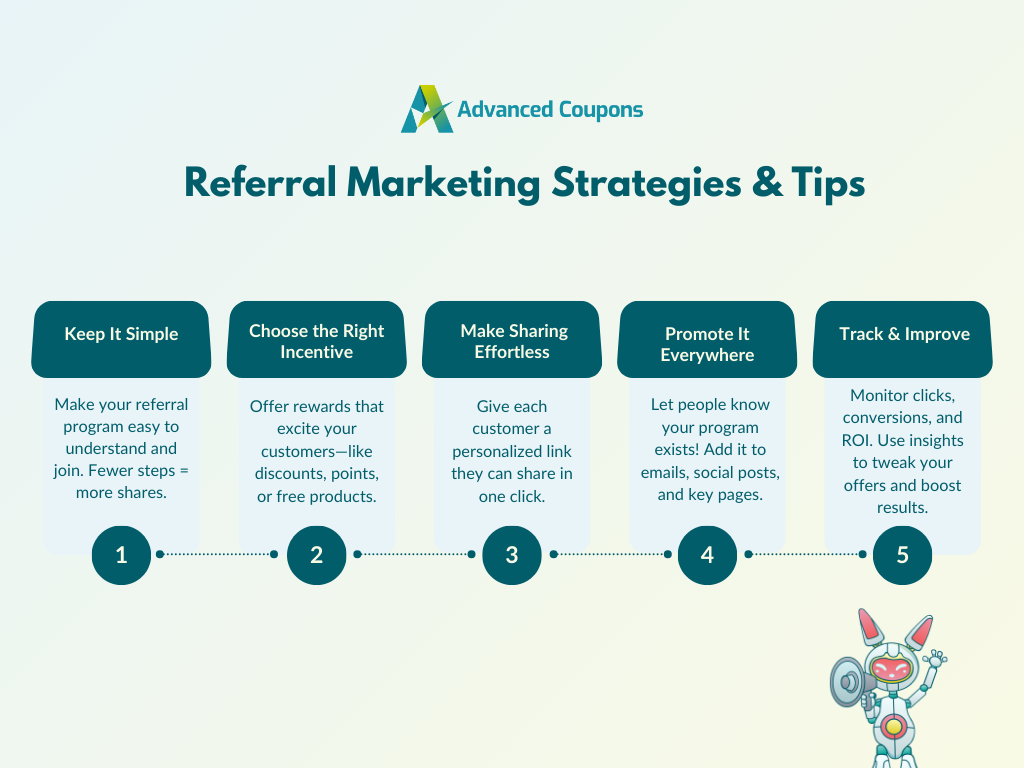
Referral Marketing Strategies And Tips To Help You Get Started
Excited to implement this strategy? Below, we share practical tips to help you create a referral program that drives growth for your ecommerce business.
1. Keep it simple and easy to understand
Simplicity is key if you want customers to participate in your referral program. Make sure that the sign-up process is straightforward, and you communicate the value upfront.
Here are a few key tips to remember:
- Use clear, easy-to-follow language
- Keep the number of steps to a minimum
- Show customers exactly what they’ll get from the start
- Use graphics, icons, or short examples to show the reward clearly
- Offer a shareable referral link they can copy with one click.
Here’s a great example from Casper:
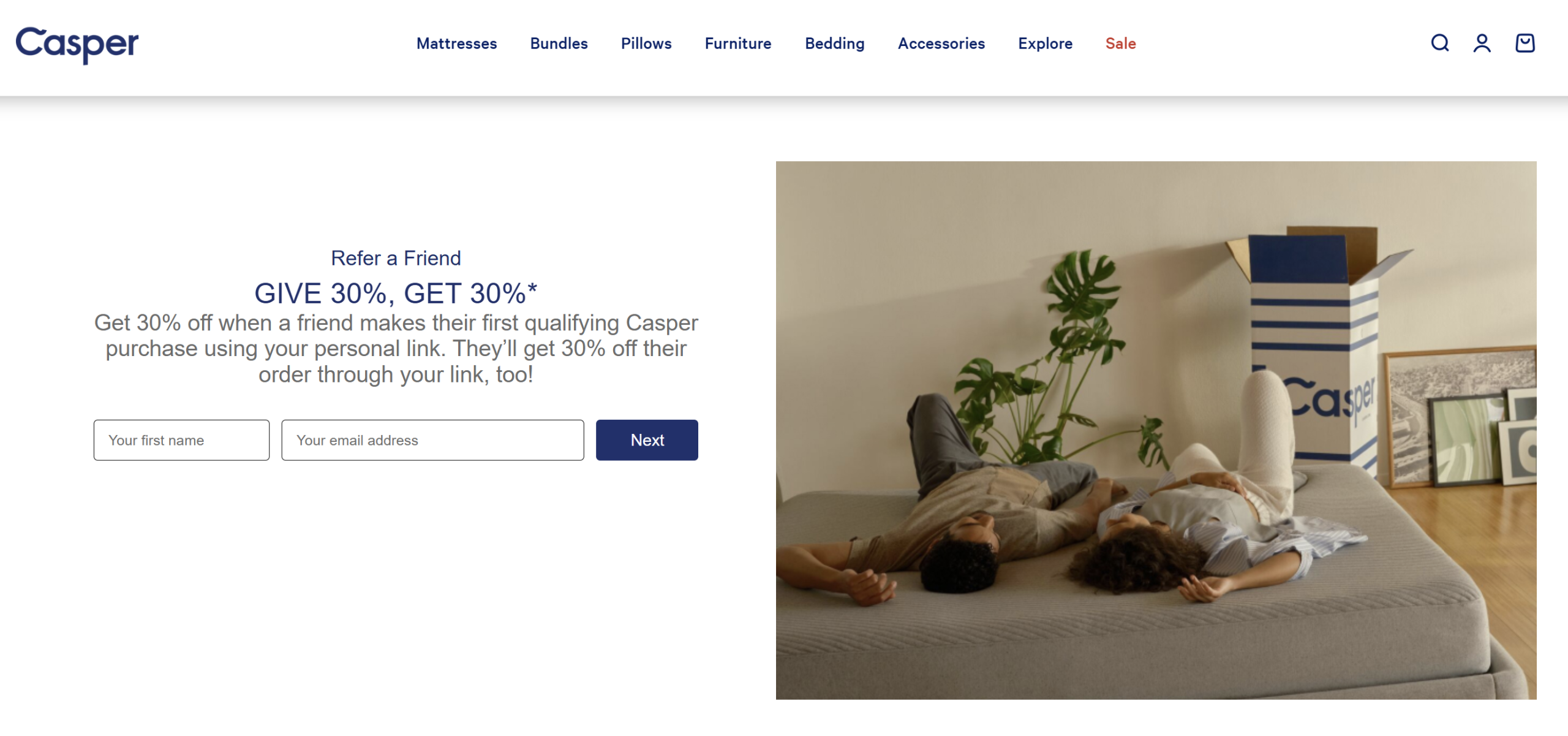
They make it incredibly simple by offering a clear “Give 30%, Get 30%” deal. All customers need to do is share their personal referral link. Once their friend makes a qualifying purchase, both get 30% off.
2. Choose the right type of incentive
To encourage customers to join, your incentives should be both compelling and relevant to your audience. Keep these two things in mind: what motivates your customers and what makes sense for your business. Some of the most common types of referral incentives include:
- Discounts: For example, “Give your friend 10% off, and you’ll get 10% off too.”
- Store credits: Great for encouraging repeat purchases.
- Loyalty points: Perfect if you already have a rewards program and want to encourage long-term engagement.
- Free products: May work well for stores with low-cost items or consumable products.
- Cash rewards: Strong motivator for some customers, though less common for smaller stores, as it may impact margins.
Some brands also tie incentives directly to their core offering. Dropbox, for instance, rewards referrals with extra storage space. When a user creates an account through a referral, both parties get bonus storage: 500 MB for Basic users and 1 GB for Plus accounts.
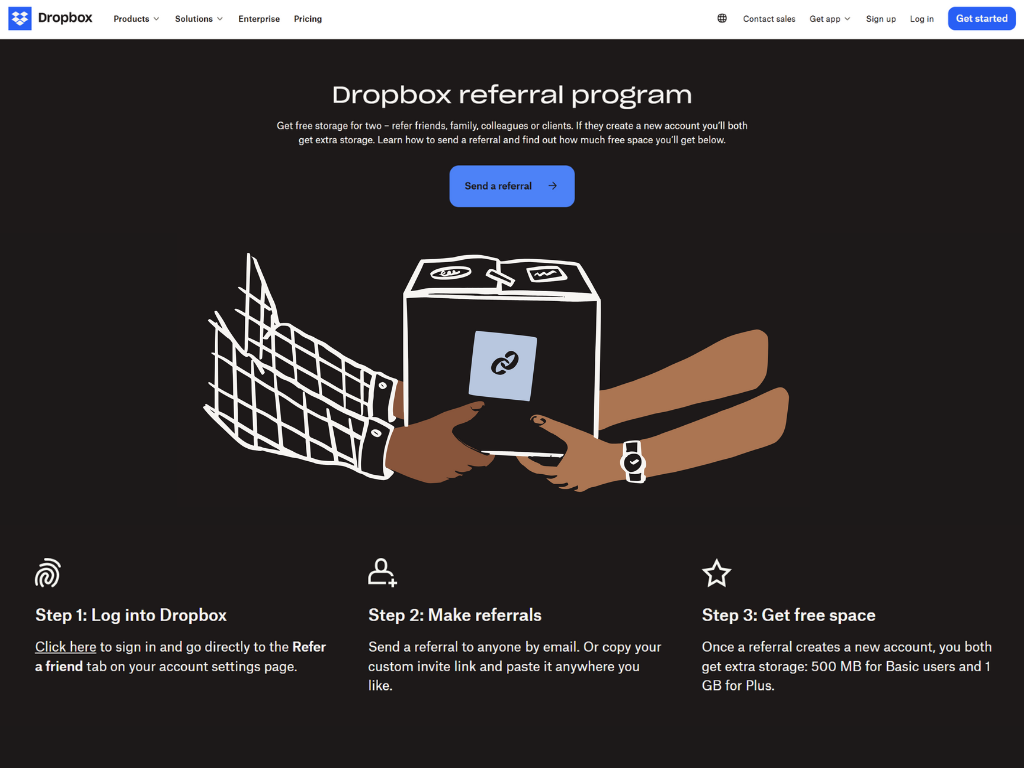
It’s a smart way to showcase product value, while rewarding both loyal customers and new ones.
3. Make sharing easy with personalized links
The most successful referral programs give each customer a unique and easily shareable link they can send to friends and family. This not only makes the referral process seamless for your customers, but it also makes tracking performance easier for your store.
Thankfully, most referral marketing tools make this easy to set up. For instance, if you’re using the WooCommerce Loyalty Program, it automatically generates a personalized referral link for each customer once referrals are enabled. Shoppers can easily access their referral links on their My Account Dashboard, making it super convenient to start sharing.
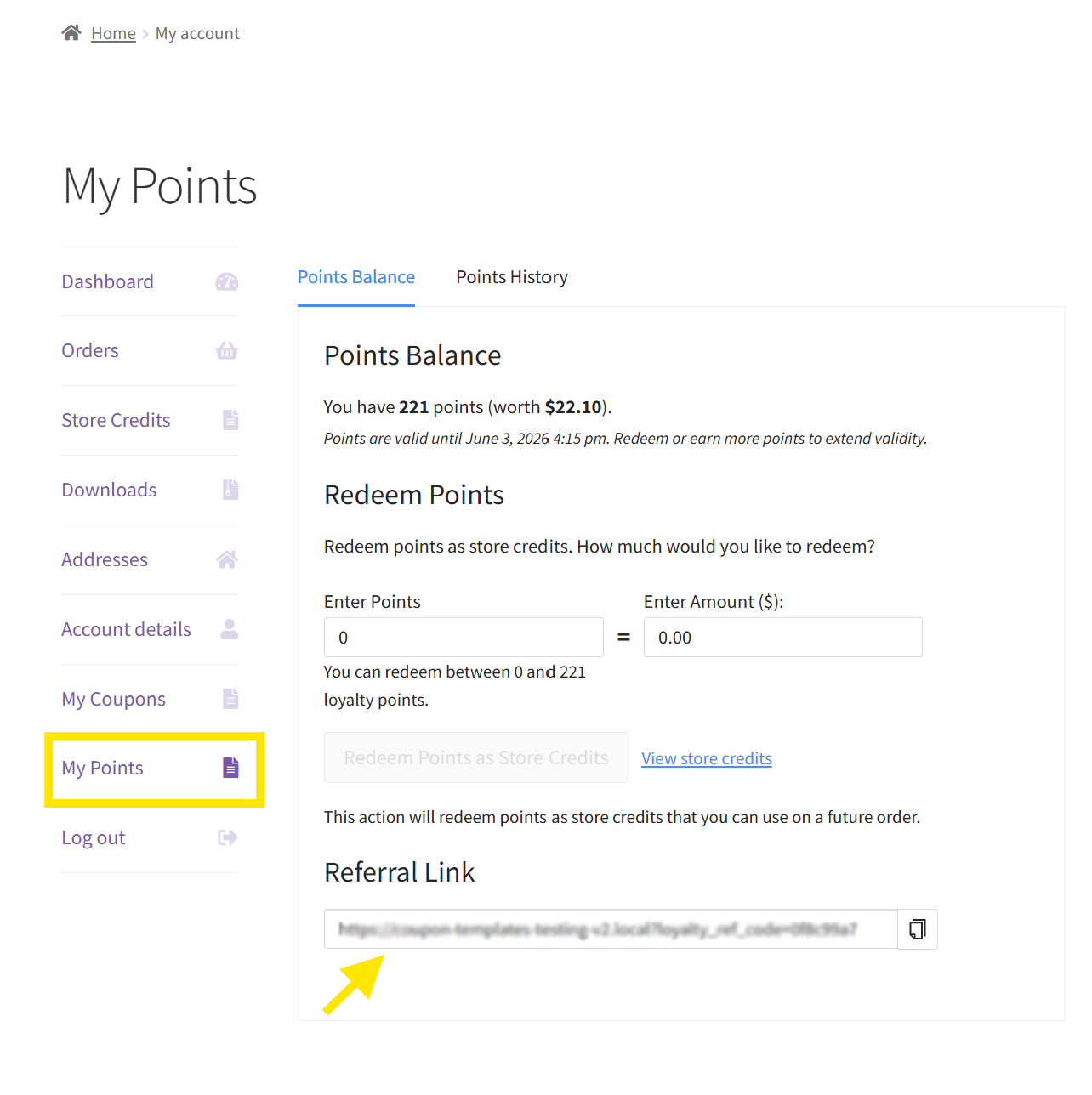
After all, what is referral marketing if not a way to make sharing your brand easy and rewarding?
4. Spread the word about your referral program
Much like any other campaign, you need to promote your referral program to get in front of the right shoppers. A great strategy is to weave it into the customer journey: create multiple and relevant touchpoints across your website and communication channels to keep it top of mind.
Here are some key tips:
- Promote it in post-purchase emails
- Include reminders in regular newsletters or promotional emails
- Add a dedicated landing page or banner to your website
- Use social media to promote your referral program
- Display referral links on the customer dashboard or account area
Related Read: How To Promote Loyalty Program (7 Effective Strategies)
5. Track performance and optimize
After launching your referral program, it’s just as important to measure performance and optimize based on these insights. Here are some of the most important metrics to track:
- Referral link clicks: How many customers are actively promoting your store?
- Conversion rate: Of those who click, how many end up signing up or buying?
- Top referrers: Who are your biggest advocates, so you can reward or spotlight them?
- Reward cost vs. revenue gained: Are your incentives paying off?
- Referral program sign-ups: How many people are joining and participating?
These insights will help you make smart decisions to improve your referral program. For instance, if you notice that only a few customers are joining, you might want to tweak your referral program landing page copy or promote it more prominently on channels like email and social media.
Frequently Asked Questions
What is the difference between affiliate and referral marketing?
Affiliate marketing entails partnering with bloggers, influencers, or content creators who promote your business or products in exchange for a commission for every sale. Referral marketing, on the other hand, focuses on your existing customer base. In this setup, existing customers are encouraged to share your store with people they know in exchange for discounts, loyalty points, store credits, and other perks.
How does referral marketing work?
Referral marketing encourages existing customers to recommend your store to their friends and family in exchange for incentives such as discounts, free products, or store credits. In a referral program, customers receive a unique referral link that they can share. When someone clicks the link and takes a specific action (like signing up or making a purchase), the referrer gets rewarded. Some brands also offer double-sided rewards, meaning both the referrer and the referred customer receive something in return
How effective is referral marketing?
Referral marketing is considered one of the most effective (and affordable) ways to grow your business. According to an industry study, referral marketing generates 3-5x higher conversion rates than other marketing channels. What’s more, referred customers tend to have higher lifetime value and better retention than those acquired through other means.
Wrapping Up
If you’re looking for new ways to grow your customer base and expand your reach, referral marketing is worth tapping into. This marketing strategy builds on what your business already has: happy customers who love your products. With the right setup and compelling incentives, you can turn satisfied shoppers into brand advocates who help bring in new customers.
In this guide, we covered:
- What is referral marketing?
- The most common types of referral marketing
- Referral marketing strategies to help you get started
- Frequently asked questions about referral marketing
If you’re looking for an easy way to launch your own referral program in WooCommerce, check out WooCommerce Loyalty Program! This powerful tool allows you to launch a points-based rewards system in WooCommerce, so you can reward customers for referrals, purchases, reviews, and more.
We hope this guide about “What is referral marketing?” helped you out! Do you have any questions about setting up a referral rewards system in WooCommerce? Let us know! 😊