
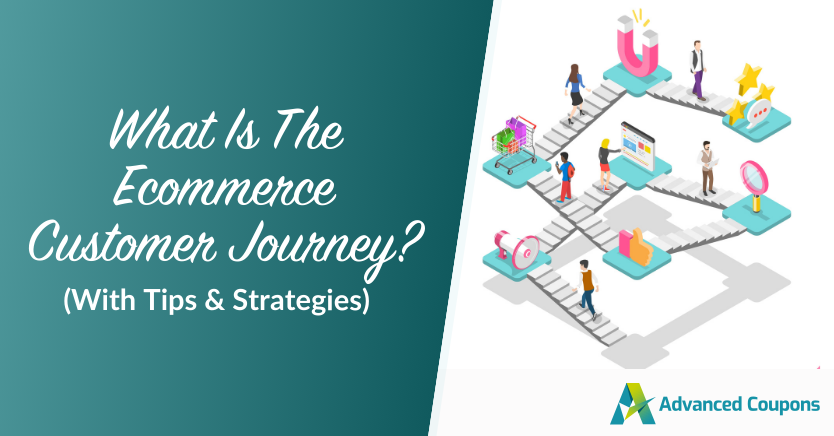
Understanding the ecommerce customer journey is paramount to building lasting customer relationships. When you know how shoppers discover, evaluate, and buy from your store, you can craft a more intentional shopping experience that guides them to purchase. This helps boost overall conversions, encourages repeat purchases, and builds brand loyalty.
This guide can help you get started! In this piece, we’ll walk you through what the ecommerce customer journey is, its stages, and share actionable strategies on how you can improve it for your WooCommerce store.
What Is The Ecommerce Customer Journey?
The ecommerce customer journey encompasses the entire experience of shoppers the moment they discover your brand, to the point where they (hopefully) become loyal, returning customers. It includes all the touchpoints customers have with your store, including your website, social media, emails, support, and post-purchase communication. Every interaction influences how customers perceive your brand, and whether they move forward with a purchase or drop off.
Understanding this journey can help you identify friction points in the shopping experience and reveal opportunities to improve conversions. As a result, you can create a more personalized experience that builds trust and guides shoppers effectively towards purchase.
Stages Of The ECommerce Customer Journey
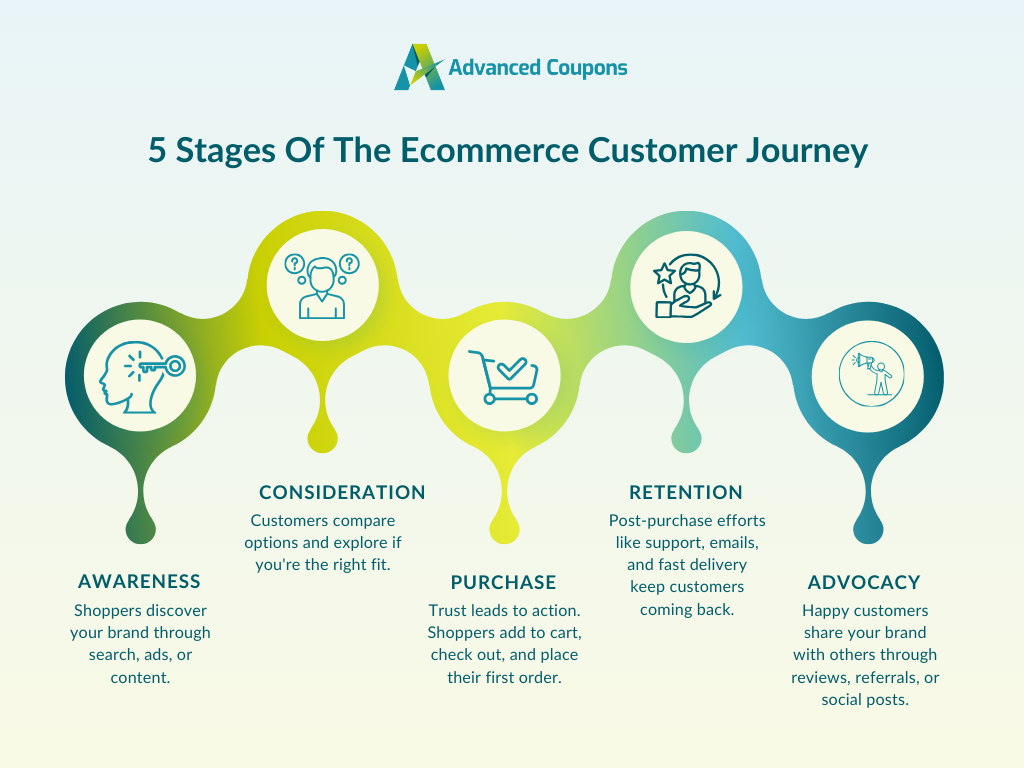
Each shopper’s journey may vary from another, but most follow a similar path with five key stages. Familiarizing yourself with each stage can help you identify what your customers need at different points.
Let’s quickly review each stage below:
Awareness
This is where customers discover your brand for the first time. They might have come across your store while searching for a product on Google, seeing one of your social media ads, or stumbling across your products through a blog post. The goal in this stage is to create a good first impression and communicate the value your products offer.
Consideration
After learning about your brand (likely alongside other potential options), customers are now weighing their options. They might be comparing your offers with others, actively browsing your website, or reaching out to your support team. At this stage, it’s crucial to have resources to educate your customers and guide their decision-making. This can be in the form of well-written product pages, FAQs, social proof, benefit-focused blog content, and pre-sale support.
Purchase
If you’ve successfully built trust during the first stages, the customer decides to buy from your brand. They add to cart, proceed to checkout, and complete their first order. Having a smooth and secure checkout process can make a huge difference in avoiding abandoned carts. The priority is ensuring fast-loading pages, offering flexible payment options, and removing unnecessary steps that might disrupt the checkout process.
Retention
Retention is about keeping the momentum going even after the first sale. To encourage customers to come back, it’s important to send out post-purchase emails, offer reliable support, and deliver a fast shipping and delivery experience. Consistent communication can help keep your brand top of mind.
Advocacy
When customers genuinely love your brand, they don’t just come back—they become advocates. Customers share your brand through reviews, referrals, or social media posts. This happens when you consistently deliver stellar shopping experiences. Encourage user-generated content, make it easy to leave reviews, and offer incentives to your most loyal shoppers to further strengthen their relationship with your brand.
7 Strategies To Improve Your Ecommerce Customer Journey
Making small but intentional improvements to your ecommerce customer journey flow can help encourage browsing shoppers to buy from your brand and build loyalty. Below, we’ve listed some actionable strategies you can start implementing right away:
1. Offer first-time buyer discounts to boost conversions
We’ve mentioned the importance of creating a positive impression during the awareness stage. Welcome discounts are a great way to nudge first-time buyers to make their first purchase. These types of promotions create a sense of welcome and value, and lower the perceived risk for new shoppers.
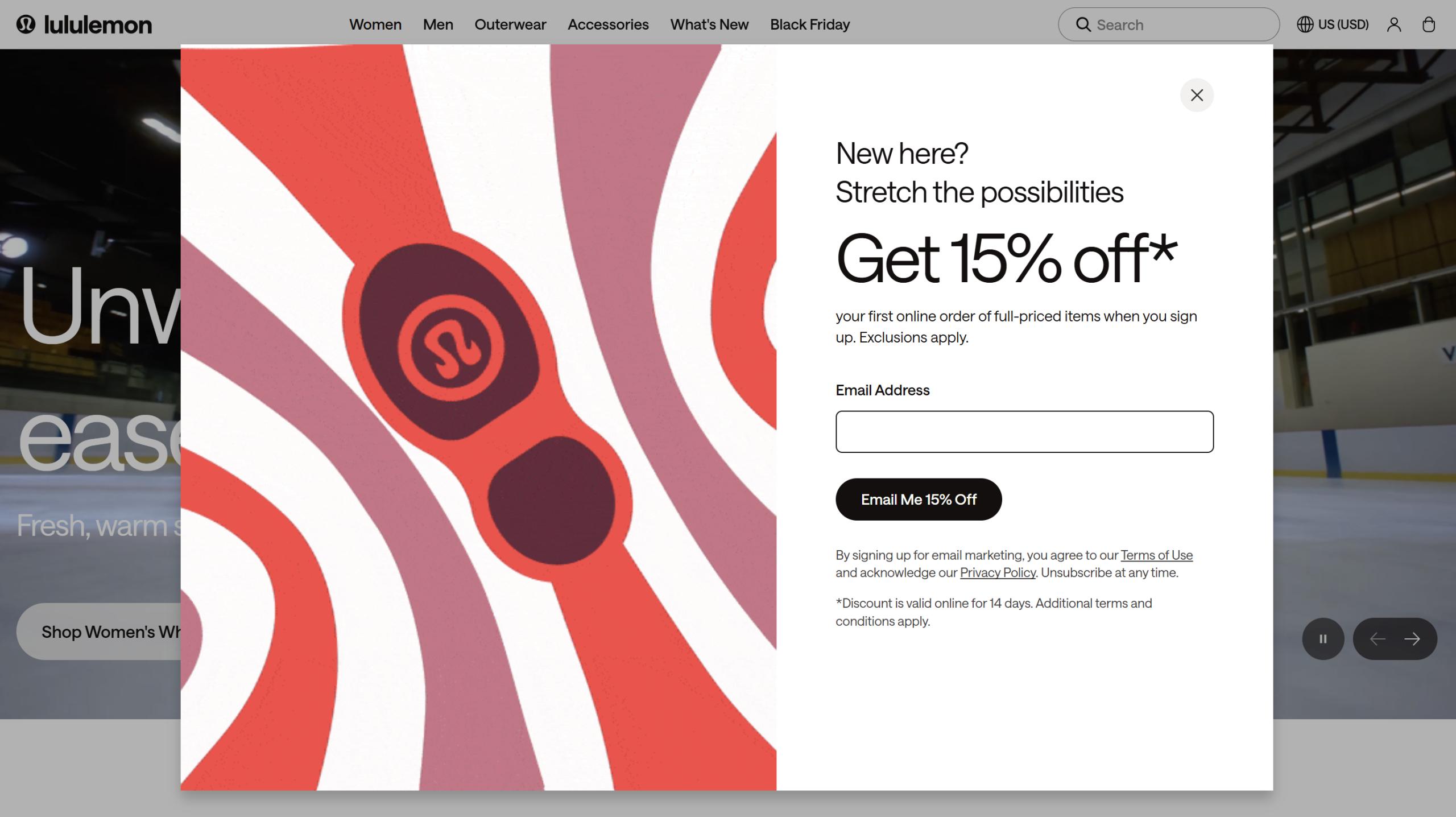
Many brands combine welcome discounts with their email list-building efforts. For example, Lululemon offers 15% off to new customers in exchange for an email signup. This allows them to capture leads and encourage orders at the same time.
💡 GOOD TO KNOW: WooCommerce store owners can use Advanced Coupons to easily set up auto-apply discounts for new shoppers. You can also set additional cart conditions to ensure the discount only applies to first-time shoppers, or add minimum spend requirements to protect your margins.
2. Boost awareness with product feeds
Product feeds are one of the most underrated yet powerful tools for ecommerce store owners. These structured files allow you to showcase your products on major sales channels like Google Shopping, Facebook, Pinterest, TikTok, and more. By listing your products on these platforms, you make it easier for shoppers to discover your offers while they’re actively searching and browsing.
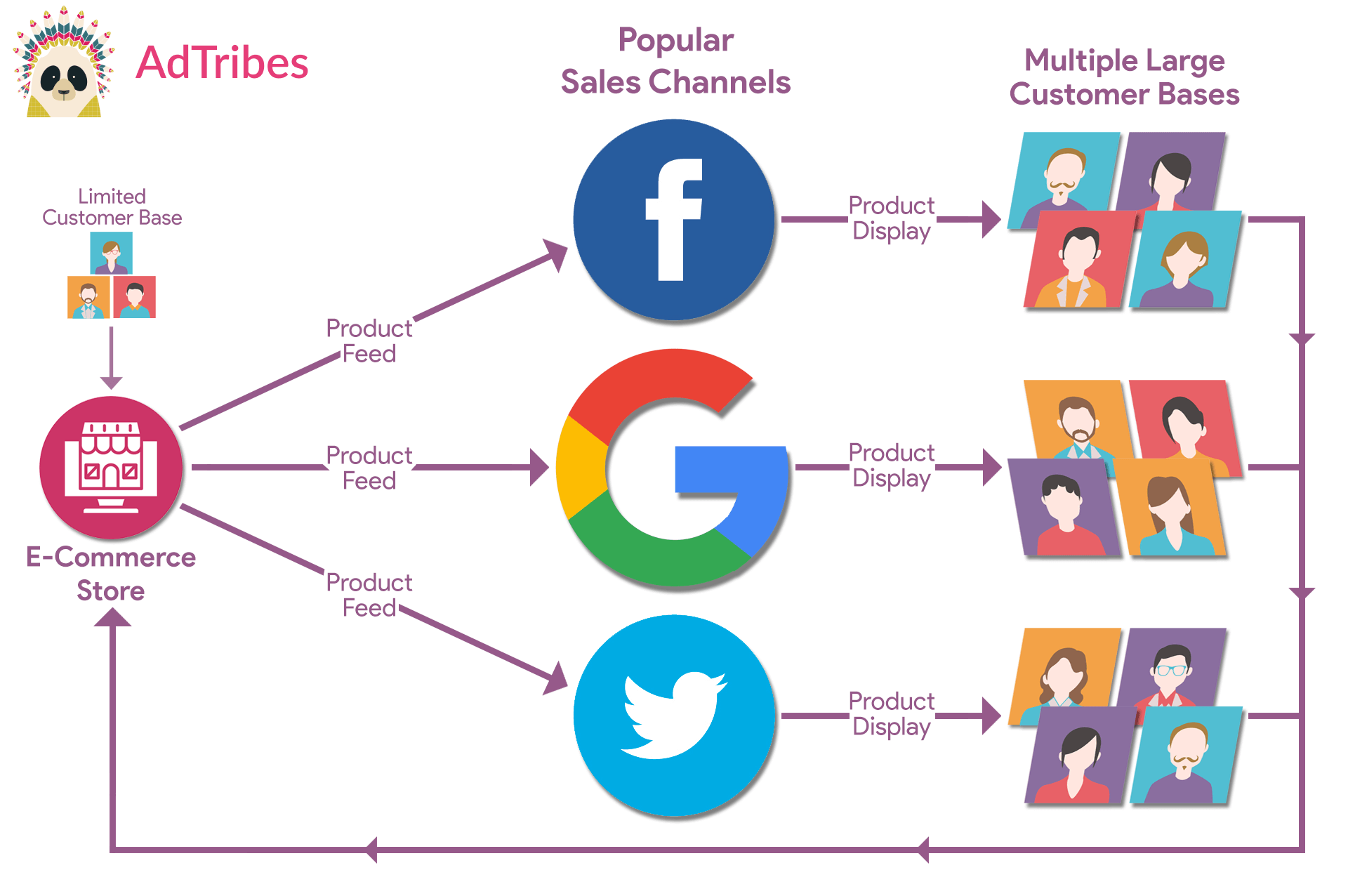
Most of the WooCommerce store owners we work with use plugins like AdTribes to easily set up product feeds for 100+ marketing channels. With this plugin, you can customize product feeds, auto-sync product updates, and apply smart filters and rules to control which products are listed where.
3. Launch a loyalty program
A great way to encourage retention and keep shoppers coming back is by launching a loyalty program. This works by granting points or exclusive rewards every time a customer completes an action, such as placing an order or leaving a review.
By doing so, you give customers a clear incentive to keep engaging with your brand. In fact, according to industry insights, 79% of customers say loyalty programs make them more likely to continue purchasing from a brand.
If you’re using WooCommerce, it’s easy to set up and launch your rewards system with a plugin like WooCommerce Loyalty Program. This tool allows you to set up a points-based reward system in a few clicks, define point-earning rules, and even customize how point messaging appears across your website.
Check out our full guide on launching a WooCommerce loyalty program here.
4. Use store credit as a retention tool
Improving the ecommerce customer journey includes giving shoppers more reasons to stick around, and store credits can help with that. Store credit is a form of virtual balance that customers can use for future purchases.
You can use store credits in many different ways, depending on your goals and marketing setup. For instance, you can:
- Offer store credits as an alternative to refunds
- Reward loyal shoppers with store credits
- Give store credits as a gesture of goodwill after a support issue
Because store credits are stored as a balance in the customer’s account, it feels more “personal”, which makes customers more likely to use them. The credits stay visible and spendable, increasing the chances of shoppers returning to place another order.
💡 GOOD TO KNOW: You can use the FREE Advanced Coupons plugin to add a store credit system to your WooCommerce store. With a few clicks, you can issue credits, display credit balances in customer accounts, and allow them to apply store credit at checkout.
5. Add live chat and support options
Real-time support helps reduce uncertainty for shoppers in the consideration and purchase stages. It’s also crucial for post-purchase reassurance, especially if shoppers have questions about returns or delivery status. Ensuring customers can reach out when they need help allows you to build trust, which is a core aspect of improving the ecommerce customer journey.
Here are some ways you can strengthen your support channels:
- Enable live chat on key pages
- Create a comprehensive FAQ section or knowledge base to empower customers
- Provide clear, visible contact options (email, chat, support form) on your website
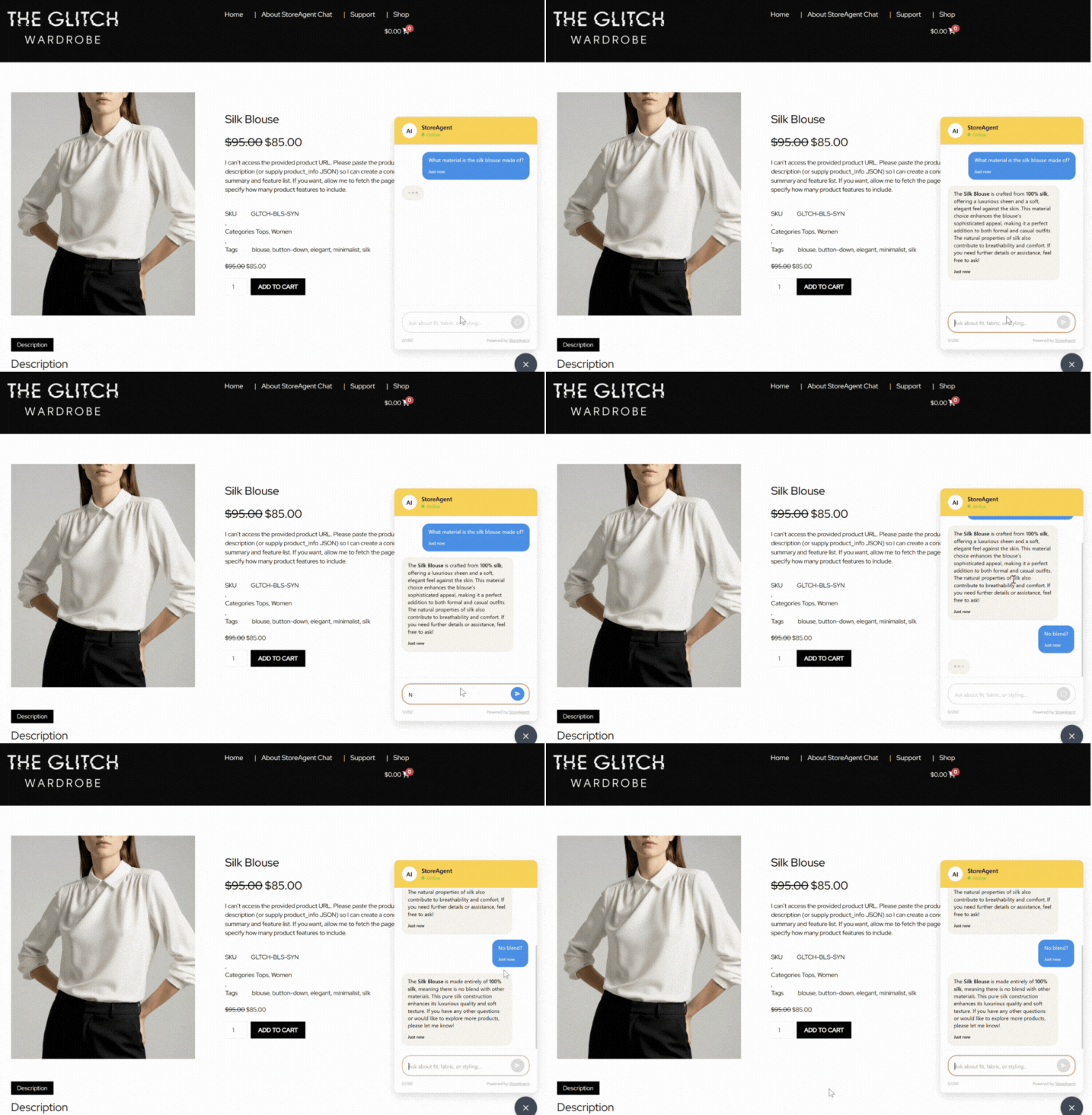
One of the easiest ways to provide better support is by enabling a 24/7 AI chatbot. We’ve tried StoreAgent‘s WordPress chatbot plugin and found it incredibly helpful. Because the chatbot is trained on your product data, it provides accurate and instant answers that guide customers confidently. It’s a quick win that reduces support load and improves the shopping experience.
6. Reward referrals to encourage advocacy
Almost half (48%) of shoppers recommend brands they love to others. You can further encourage this advocacy by offering incentives to customers who spread the word. This can be in the form of discounts, store credits, or exclusive perks.
Here are a few key tips to make it work for your WooCommerce store:
- Offer double-sided rewards so both the sender and the friend benefit
- Provide clear referral links or codes for easy sharing and tracking
- Highlight the program across your store, thank-you pages, and post-purchase emails
You can also consider tying your referral rewards to your loyalty program. For instance, with WooCommerce Loyalty Program, you can reward referrals with loyalty points every time a referred friend signs up or makes a purchase.
RELATED READ: How To Reward Customers With Referral Points In WooCommerce
7. Set up post-purchase follow-up emails
As we’ve learned so far, the ecommerce customer journey doesn’t end after the first order. In fact, what happens after that is the key to building long-term loyalty. Post-purchase emails help reinforce trust by keeping your brand top of mind and letting customers know what to expect next.
Aside from order and delivery updates, consider sending out:
- Product usage tips or care instructions to add value for shoppers
- Review requests or feedback forms
- Follow-up offers or coupons to encourage repeat orders
- Loyalty program invites to deepen customer engagement
Another good strategy is to launch exclusive post-purchase promotions. For instance, you can offer an exclusive discount for their next orders, or reward customers with loyalty points for leaving a review.
💡 GOOD TO KNOW: With Advanced Coupons, you can set up URL offers that automatically apply the coupon to the customer’s cart—perfect for email campaigns.
Frequently Asked Questions
What is the ecommerce customer journey?
The ecommerce customer journey is the complete experience of shoppers from discovering your brand to becoming loyal, returning customers, including all interactions with your store, website, social media, and communications.
What are the stages of the ecommerce customer journey?
The main stages are Awareness, Consideration, Purchase, Retention, and Advocacy, each representing a step from discovering your brand to recommending it to others.
How can I improve the awareness stage of my ecommerce store?
You can boost awareness by offering first-time buyer discounts and utilizing product feeds to showcase your products on major sales channels, making it easier for shoppers to discover your store.
Wrapping Up
Learning about the ecommerce customer journey unveils opportunities for you to connect, delight, and build trust with shoppers. With the right strategies in place, you can create a seamless shopping experience that customers love coming back to!
In this guide, we covered the definition and stages of the ecommerce customer journey and revealed 7 useful strategies you can start implementing to improve it. Check out the recap below:
- Offering first-time buyer discounts
- Boosting awareness with product feeds
- Launching a loyalty program
- Using store credit as a retention tool
- Adding live chat and support options
- Rewarding referrals
- Setting up post-purchase follow-up emails
Tools like Advanced Coupons can help you get started easily. This powerful plugin extends the default coupon features of WooCommerce, letting you offer store credits, set up advanced deals, and automate promotions to guide shoppers at every step of the purchase journey.
We hope this guide helped! 😊