

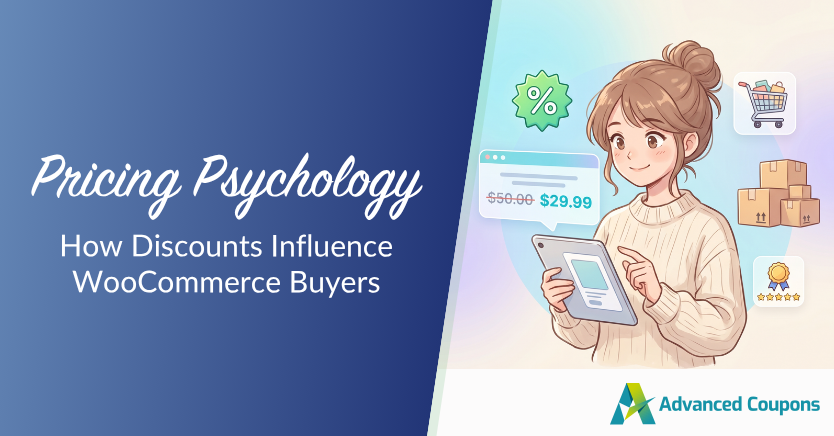
Picture two identical WooCommerce stores selling the same product at nearly the same effective price. One displays: “$40.00.” The other displays: “$55.00 $39.99 — Save 27%.” Even before doing the math, the second offer often feels more compelling because it gives the shopper a clearer reference point.
Why? Because the brain doesn’t process prices in a vacuum. It processes them relative to reference points, perceived losses, and social cues. These patterns are well studied and directly relevant to how you set up coupons and promotions in WooCommerce.
Most store owners set discounts based on gut feel, round numbers, or whatever competitors are doing. This WooCommerce pricing psychology guide breaks down 7 pricing psychology principles and shows you how to apply them more intentionally in your store using Advanced Coupons features.
What Is Pricing Psychology (And Why Ecommerce Store Owners Should Care)
Pricing psychology is the study of how price presentation, framing, and context shape purchasing decisions. Customers rarely evaluate prices rationally. Instead, they rely on mental shortcuts (called heuristics) that make certain offers feel like better deals than others, regardless of the actual math.
Here’s a simple example: marketing professor Jonah Berger popularized the “Rule of 100” in his book Contagious. For products under $100, a percentage discount (like “20% off”) feels bigger than the equivalent dollar amount (“$5 off”). For products over $100, the reverse is true: “$50 off” feels more substantial than “25% off.” The discount is identical. The perception isn’t.
This matters for WooCommerce store owners because every coupon, BOGO deal, and sale badge shapes how shoppers interpret value. You’re already using pricing psychology in some form. The difference is whether your promotions are structured intentionally or left to chance.
Anchoring: Setting The Reference Point
Anchoring is the tendency for people to rely heavily on the first piece of information they encounter when making a decision. In pricing, the original price becomes the “anchor” that makes the discounted price feel like a bargain.
This isn’t speculation. Tversky and Kahneman demonstrated the anchoring effect in their foundational 1974 paper “Judgment under Uncertainty: Heuristics and Biases”, published in Science. In one experiment, participants who saw a high random number on a wheel of fortune estimated significantly higher values on unrelated questions than participants who saw a low number. The anchor, even when completely arbitrary, shifted their judgment.
In WooCommerce, anchoring works through strikethrough pricing. When shoppers see the original price crossed out next to the sale price, the original becomes the anchor. A product marked “$75 $49.99″ feels like a steal. The same product listed at “$49.99” with no reference point feels like just another price.
This is one reason “was/now” pricing is so common in ecommerce. The anchor doesn’t need to be the product’s all-time high price. It just needs to be visible, credible, and positioned next to the sale price so shoppers can quickly understand the value of the offer.
To make anchoring visible beyond individual product pages, Advanced Coupons’ Advanced Promo Kit adds sale badges to category pages and product listings. This means the anchor (original price) and the discount are visible before the customer even clicks into the product page, capturing attention earlier in the browsing process.
Scarcity And Urgency: Time And Quantity Limits
When something is scarce or available for a limited time, people assign it more value and act faster. This principle draws on loss aversion and the fear of missing out. Robert Cialdini documented the scarcity principle extensively in Influence: The Psychology of Persuasion, and its application in ecommerce is well-established.
Time-based urgency
Flash sales and expiring coupons create urgency by attaching a deadline to the offer. When customers know a discount disappears at midnight Friday, they’re more likely to buy now rather than “think about it” and forget.
In WooCommerce, Advanced Coupons’ scheduled coupons let you set clear start and end dates for time-sensitive promotions. You can also use Advanced Promo Kit to make sale messaging more visible on the storefront while the offer is active. For a deeper walkthrough, see our WooCommerce flash sale guide.
Quantity-based scarcity
Limiting coupon uses creates a different kind of urgency: “only 50 left” or “first 100 customers only.” This shifts the pressure from time to availability.
Advanced Coupons supports usage limits per coupon and per customer, so you can cap total redemptions and control how often each shopper can use the offer. When those limits are real and clearly communicated, they can add genuine urgency to the promotion. For setup details, check out our guide on creating urgency with coupon limits.
Practical tip: Scarcity works best when the limit is real. If you promote a limited-time offer, make sure the deadline or usage cap is clearly defined and actually enforced. That helps customers take the promotion seriously and protects trust in future campaigns.
Loss Aversion: The Fear Of Missing Out
Loss aversion means people feel the pain of losing something roughly twice as intensely as the pleasure of gaining something equivalent. Kahneman and Tversky established this in their 1979 paper on Prospect Theory, published in Econometrica. The core finding: the psychological weight of a $50 loss is roughly equal to the weight of a $100 gain.
For WooCommerce promotions, this means framing matters as much as the discount itself. “Save $15 today, offer expires Friday” triggers loss aversion because the customer imagines losing the $15 savings. “Get $15 off” frames the same discount as a gain, which carries less psychological weight.
In practice, loss-framed messaging can make a promotion feel more urgent because it highlights what the shopper may miss by waiting. Compare “Save $15 today” with “Don’t miss your $15 savings before Friday.” The offer is the same, but the framing changes the emphasis.
When writing coupon descriptions and promotional copy, lead with the value the customer could miss if they delay. You can reinforce that message across your coupon text, banners, and cart messaging so the promotion feels clear and consistent.
The Decoy Effect: Steering The Choice
The decoy effect occurs when the addition of a third, less attractive option makes one of the original two options look significantly better by comparison. Dan Ariely demonstrated this in his book Predictably Irrational using The Economist’s subscription pricing. When students chose between a web-only subscription ($59) and a print-only subscription ($125), most chose web-only. But when a third option appeared (print-only for $125 alongside print-and-web for $125), the majority switched to print-and-web because the decoy made it look like an obvious bargain.
In WooCommerce, you can apply the decoy effect through tiered discount structures. Consider this setup with Advanced Coupons’ cart conditions:
- Spend $50, get 10% off
- Spend $100, get 25% off
- Spend $150, get 30% off
The jump from 10% to 25% at the $100 level is the compelling anchor. Customers look at the three tiers and the middle option stands out as the best value for the money. The $150 tier exists partly to make the $100 tier look more reasonable.
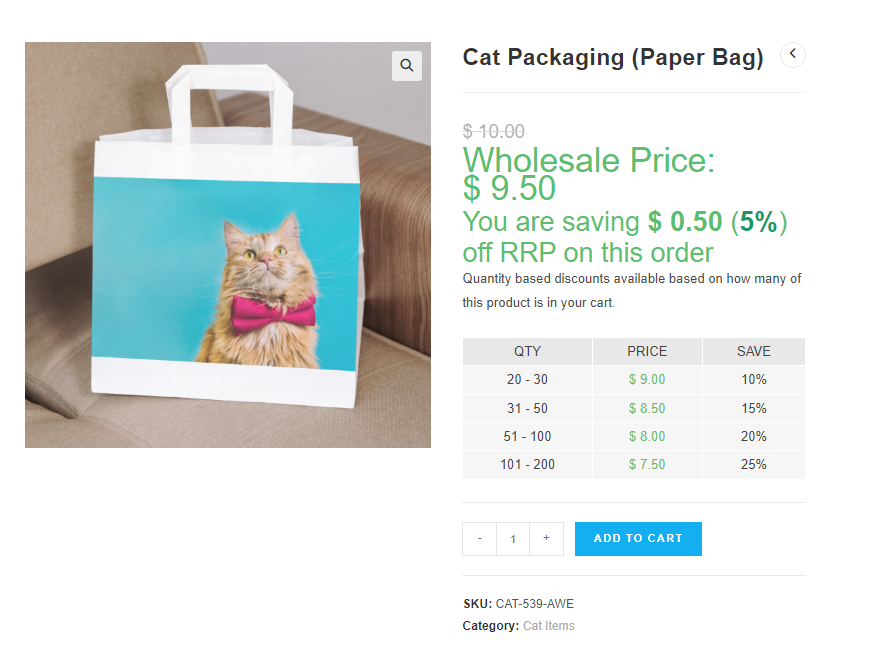
You don’t need three product bundles to use this. Even simple cart-based thresholds work. The key is making the gap between the lowest and middle tiers large enough that customers feel they’d be leaving value on the table by not reaching the middle tier. For more on structuring these offers, see our guide to the quantity discount model.
Charm Pricing: The Power Of 9
Prices ending in 9 or .99 are perceived as significantly cheaper than the next round number. $29.99 feels meaningfully cheaper than $30.00, even though the difference is a single cent.
This isn’t just folk wisdom. Anderson and Simester published a series of field experiments in Quantitative Marketing and Economics (2003) testing $9 price endings with a national mail-order retailer. They found that items priced with a $9 ending sold at higher rates than the same items at lower prices. In one test, a women’s clothing item sold better at $39 than at $34. The $9 ending acted as a signal that the item was a good deal, even when the actual price was higher.
In WooCommerce, this means paying attention to where your discounted price lands. A 20% coupon on a $50 product gives you $40.00, which works fine. But a 20% coupon on a $47 product gives you $37.60, which doesn’t carry the same psychological weight as $37.99 or $36.99.
When the final price matters more than the percentage, use Advanced Coupons’ fixed-amount discounts instead of percentage discounts. Setting a $10.01 discount on a $47 product lands the price at $36.99, which hits the charm pricing sweet spot.
Social Proof: What Others Are Doing
Social proof is the tendency to look at other people’s behavior when making a decision. When shoppers are uncertain, seeing that others have purchased, reviewed, or endorsed a product reduces their perceived risk and increases confidence.
Social proof helps reduce uncertainty. When shoppers can see ratings, reviews, or other signs that a product is trusted, they often feel more confident about buying.
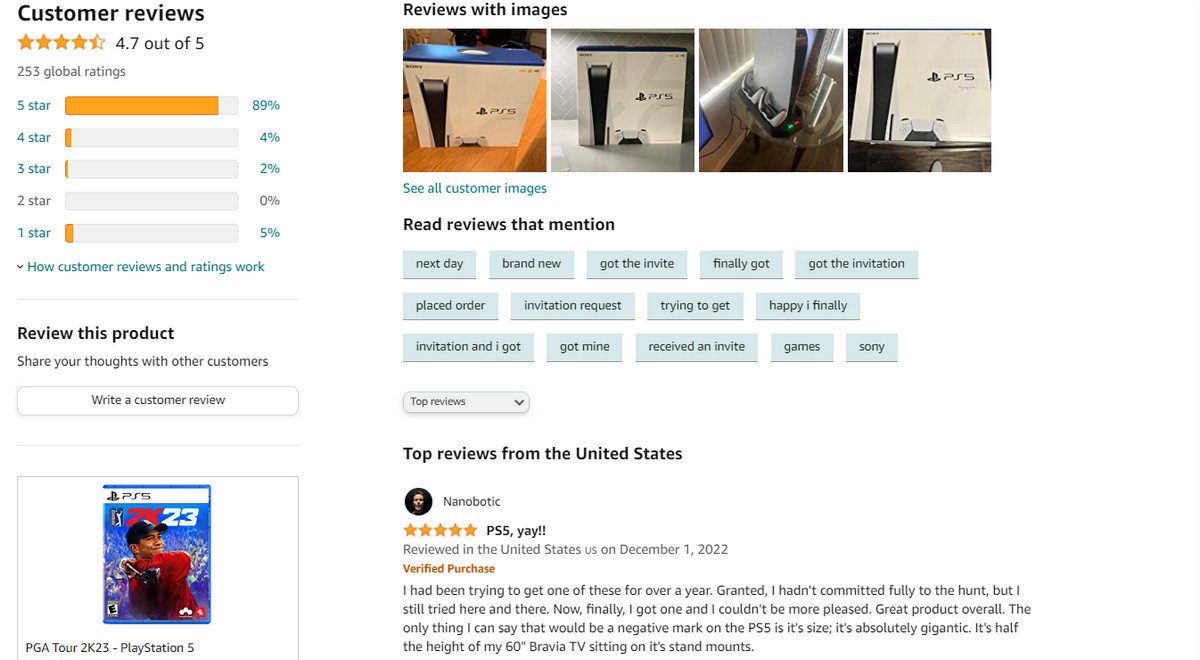
In WooCommerce, social proof and promotions often work well together. A discount gives the shopper a reason to buy now, while reviews and ratings help the offer feel more credible.
If you use Advanced Loyalty Program to reward review activity, that can support this strategy by giving customers another reason to engage after purchase. For more on pairing trust-building elements with urgency tactics, see our guide on how to create urgency in WooCommerce sales.
Reciprocity: Give Before You Ask
Reciprocity is the social obligation to return a favor. When someone gives you something, even something small, you feel compelled to give something back. Cialdini identified this as one of the most powerful principles of persuasion, and it applies directly to ecommerce.
In WooCommerce, reciprocity shows up whenever a customer receives something unexpected. A surprise discount at checkout. A free gift with their order. A store credit after a support interaction. These small gestures create goodwill that increases both immediate conversion and long-term loyalty.
Advanced Coupons’ auto-apply feature can deliver surprise discounts at checkout without the customer having to do anything. They add items to their cart, and the discount appears automatically. This removes friction and triggers reciprocity at the same time: the store “gave” them a discount they didn’t ask for, and the customer feels inclined to complete the purchase.
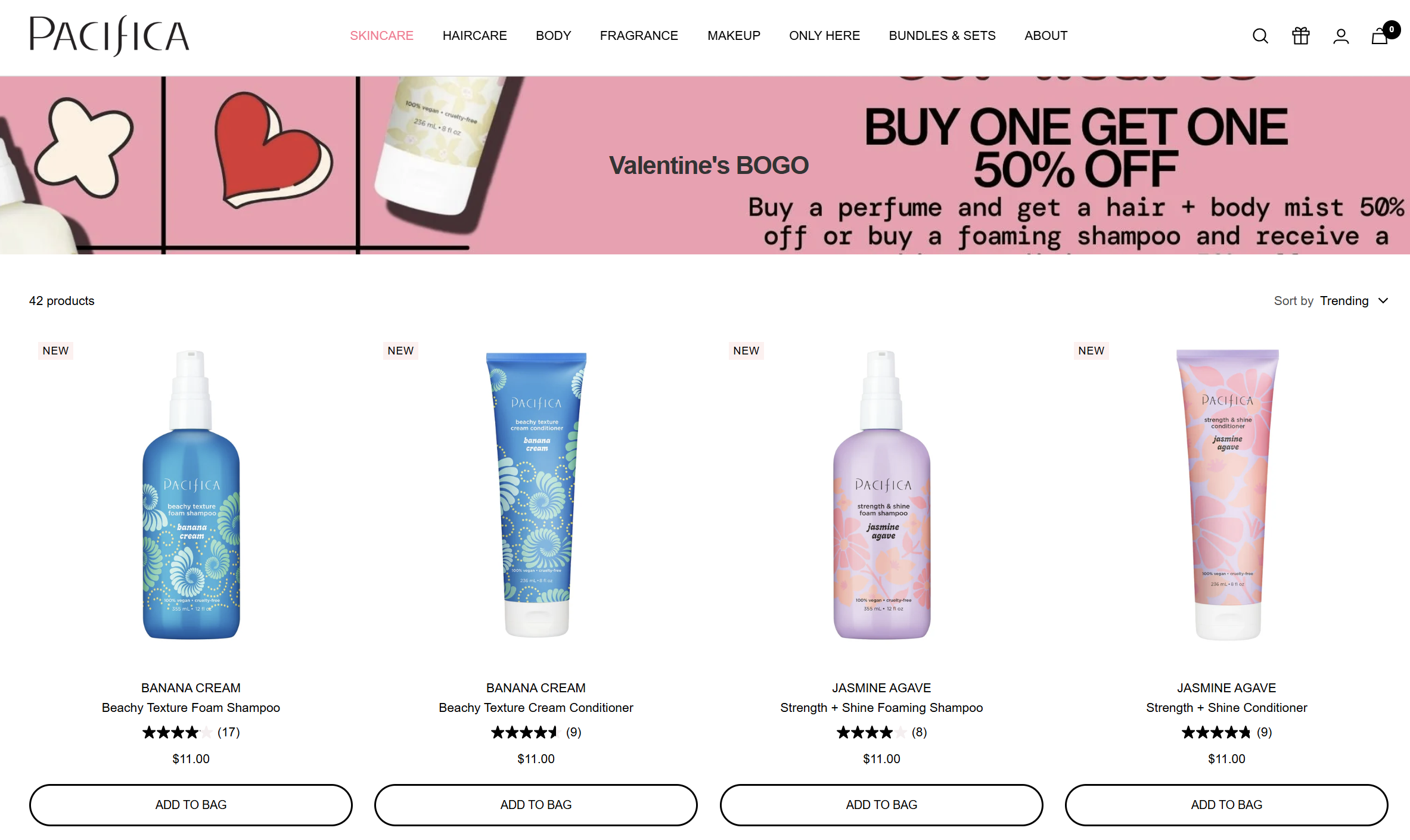
BOGO (buy one, get one) deals work the same way. The “free” item feels like a gift, even though the customer had to buy something to receive it. Advanced Coupons supports a range of BOGO configurations, from buy-one-get-one-free to buy-two-get-one-half-off. Each variation triggers the same reciprocity response: the customer received something, so they feel positively about the store.
Store credit is another powerful reciprocity tool. After a customer contacts support with a complaint, issuing store credit (rather than just resolving the issue) creates a reason to return and purchase again. It’s a small upfront cost that drives repeat revenue.
Frequently Asked Questions
Does pricing psychology work for small WooCommerce stores?
Yes. These principles are about how shoppers interpret prices and offers, so they can still be useful for smaller WooCommerce stores. The main difference is volume: a smaller store may need more time or traffic before testing results become obvious.
Should I use percentage discounts or fixed-amount discounts?
It depends on your product price. Jonah Berger’s “Rule of 100” offers a useful guideline: for products under $100, percentage discounts feel larger (e.g., “25% off” on a $40 item). For products over $100, dollar amounts feel larger (e.g., “$50 off” on a $200 item). Advanced Coupons lets you set both types, so you can match the format to your price point.
How do I test which pricing strategy works best for my store?
Run controlled experiments. Change one variable at a time (coupon framing, price ending, discount structure) and measure the impact on conversion rate and average order value over a defined period. Advanced Coupons’ cart conditions and scheduled coupons make it straightforward to run time-boxed promotions that isolate a single variable.
Can I combine multiple pricing psychology principles in one promotion?
Absolutely, and the most effective promotions usually do. A flash sale with a countdown badge (urgency), showing the original price struck through (anchoring), offering a BOGO deal (reciprocity), and displaying review counts on the product page (social proof) stacks four principles into a single campaign. The key is to make each element genuine: real deadlines, real reviews, and real discounts.
Is pricing psychology the same as manipulation?
No. Pricing psychology is about understanding how customers already make decisions and designing offers that align with those patterns. You’re not tricking anyone into buying something they don’t want. You’re presenting your products in a way that helps shoppers make confident purchasing decisions more quickly.
Put Pricing Psychology To Work In Your WooCommerce Store
Many WooCommerce promotions already rely on pricing psychology, whether you think of them that way or not. A strikethrough price can create anchoring. An expiring coupon can add urgency. A BOGO deal can tap into reciprocity. The real opportunity is using these principles more intentionally when you build your offers.
Here’s a quick recap of each principle and how to apply it:
- Anchoring: Display original prices with strikethrough next to sale prices. Use sale badges on category pages.
- Scarcity and Urgency: Set firm expiration dates and usage limits on coupons. Use countdown badges.
- Loss Aversion: Frame coupon messaging around what the customer loses by not acting, not what they gain.
- The Decoy Effect: Structure tiered discounts so the middle tier looks like the best value.
- Charm Pricing: Use fixed-amount discounts to land final prices on .99 or .97 endings.
- Social Proof: Pair promotions with review incentives through Advanced Loyalty Program.
- Reciprocity: Surprise customers with auto-applied discounts and BOGO deals.
For ideas to apply these principles to, see our 12 promotion tactics for WooCommerce. Ready to put WooCommerce pricing psychology to work in your store? Advanced Coupons gives you the tools to turn these ideas into real promotions, including scheduled coupons, cart conditions, BOGO deals, auto-apply offers, and loyalty features that can encourage repeat engagement.