Halloween is fast approaching, but is your business prepared? You surely won’t want to miss out on this prime opportunity to drive sales and create a memorable experience for your customers. There’s no better time than now to craft a winning Halloween marketing campaign that captures the thrill of the season and draws shoppers to your store!
No worries though, we’ve got you covered! In this guide, we outline the essential foundational steps to planning a strategic Halloween marketing campaign. Consider it as a checklist to make sure you’re on track! Ready to learn? Then let’s begin!
What Is A Halloween Marketing Campaign?
Halloween is one of the most popular events celebrated across the world–it’s traditionally observed on the 31st of October, marked by costume parties, candies, and everything spooky. This year, Halloween falls on a Saturday, October 31, 2026.
For retailers, it’s a golden opportunity to launch themed promotions to attract shoppers and stand out in the bustling holiday season. Halloween marketing campaigns cover all efforts that tap into this excitement, including themed discounts, Halloween flash sales, giveaways, or exclusive product launches. It’s about leveraging the excitement of the season to create a sense of urgency and encourage customers to buy.
According to the National Retail Federation, total US Halloween spending is expected to reach a record $13.5 billion in 2026, proving how big of an opportunity this is for business owners. Perfecting your Halloween marketing strategy can also help set the stage for Black Friday and year-end sales, allowing you to gather insights and test strategies to prepare for these bigger sales events. With the right planning and strategizing, your business can tap into this massive sales potential!
How To Plan Your Halloween Marketing Campaign (Ultimate Checklist)
We know how overwhelming it is to figure out where to start when crafting the perfect marketing campaign. So, to make things easier, we’ll walk you through it step-by-step!
1. Determine your goals and metrics
Before anything else, take a good look at your business. Determine what aspects you’re aiming to improve, then set clear goals from there. Perhaps you’re aiming to improve your brand reach, drive sales, or want to get rid of slow-moving inventory before the year ends?
Having a solid set of goals will help you focus your efforts, measure success, and give you a clear sense of direction. For a seasonal campaign like Halloween, common goals might include increasing your overall sales or attracting new customers to your store.
Once you have a clear set of goals, the next step is setting your KPIs (key performance indicators) – these are the metrics that will help you measure your campaign’s success. Typical examples include:
- Total revenue: The revenue generated during your Halloween sale.
- Conversion rate: Number of visitors who successfully complete a purchase after viewing your Halloween promotions.
- Coupon redemption rate: The number of times your coupon codes are used. This is a useful metric to gauge if your discounts are effective.
- Average order value: Determines how much customers spend per order on average.
- Customer engagement: If you’re running email campaigns, for instance, you may want to track engagement metrics like open rates or click-through rates.
💡 PRO TIP: Setting SMART (Specific, Measurable, Achievable, Relevant, and Time-bound) goals is key! Instead of setting a generic goal like “increase sales”, opt for a specific and measurable goal like, “increase Halloween sales by 10% compared to last year’s figures”. This gives you a clear target to aim for and a benchmark to evaluate success.
2. Choose a creative Halloween theme
This is where it gets really fun! After setting your goals, it’s time to get your creative juices flowing and choose a Halloween theme that fits your brand and will resonate with your audience. Remember, your theme will tie all your marketing efforts together, from social media ads to email campaigns and website banners.
Consider your brand’s personality when choosing a theme. For instance, if your brand presents itself as more “playful”, you might want to opt for something lighthearted with cute graphics, like this example below:

Don’t be afraid to experiment and get creative! It’s key to building a memorable marketing campaign that truly captures the essence of your brand.
3. Set your sale dates
It’s also important to choose the right campaign dates. Depending on your business goals, you may want to run a week-long sale or build a stronger sense of urgency with limited-time flash sales. Here are some key things to consider:
- Build up the excitement: Teaser social media posts or emails can help build anticipation 2-3 weeks leading up to your main sale.
- Launching the main sale: Some businesses opt to run their Halloween sale in mid-October, as customers are starting to search for themed products, decorations, and deals during this time. This is the opportune time to launch your biggest offers, including BOGO (Buy One Get One) deals or exclusive Halloween bundles.
- Last-minute push: You can also appeal to last-minute shoppers by offering exclusive “last-minute deals” or “last chance promotions” on the last few days of the sale (Friday, October 30 and Saturday, October 31).
Don’t leave your planning too late, either! According to the NRF’s 2026 Halloween survey, 49% of shoppers plan to start their Halloween shopping in September or earlier. Here’s what a Halloween promotion timeline could look like this year (example dates):
| When | What to do |
|---|---|
| Late September to early October | Set your goals, theme, and offers, then set up and schedule your coupons |
| October 1 to 14 | Tease your sale with social media posts and emails |
| October 15 to 29 | Launch your main sale with your biggest offers |
| Friday, October 30 to Saturday, October 31 | Run your last-minute push or a Halloween flash sale |
| First week of November | Review your results and use them to plan for Black Friday (November 27) |
💡 PRO TIP: Consider combining different types of promotions for your Halloween sale to appeal to a larger group of shoppers. For example, you may want to craft buy-one-get-one deals and bundle discounts for your main sale and then end with a deeper percentage discount for your last push. This will work particularly well if you’ll run a longer sales period.
4. Set up your coupons and discounts early
With your goals, theme, and dates locked in, it’s time to determine what type of promotions you’ll offer! Planning and configuring these ahead of time will save you from last-minute headaches. Deals matter to Halloween shoppers, too: the same NRF survey found that 26% of consumers will look for coupons or sales.
Begin by identifying what type of discounts you want to offer. Refer back to the goals you’ve set. For instance, if your goal is to increase average order values, you may want to craft percentage discounts with minimum spend requirements (e.g., “10% Off Orders Over $50”).
We’ve created a detailed guide about the type of Halloween promotions you can explore, which you can check out below:
💡 PRO TIP: Use plugins like Advanced Coupons to easily set up and test your coupon promotions. With this powerful tool, you can easily configure complex coupon offers like BOGO deals, shipping discounts, and stackable coupons. This tool also features ready-made coupon templates that allow you to create Halloween deals in just a few clicks:
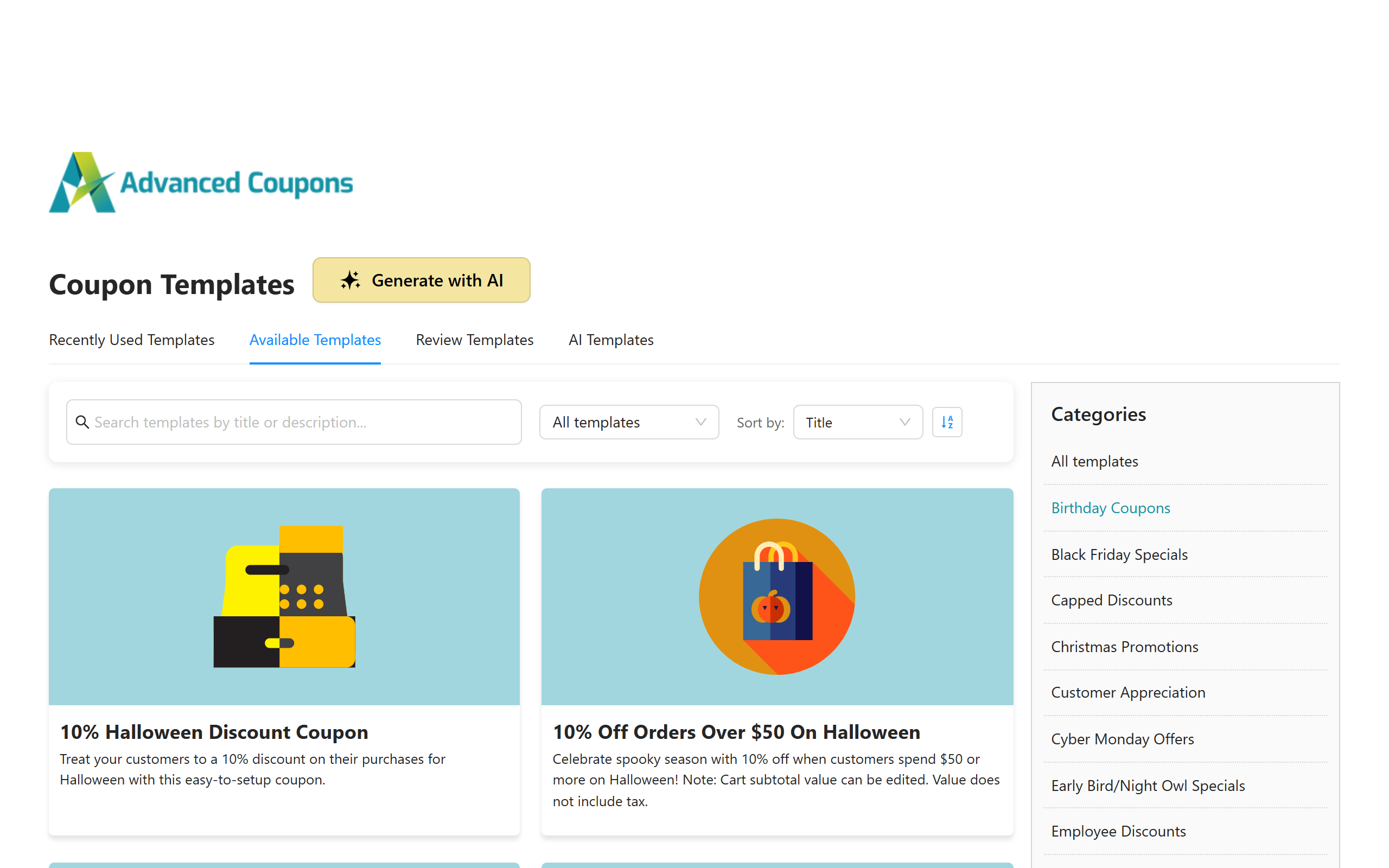
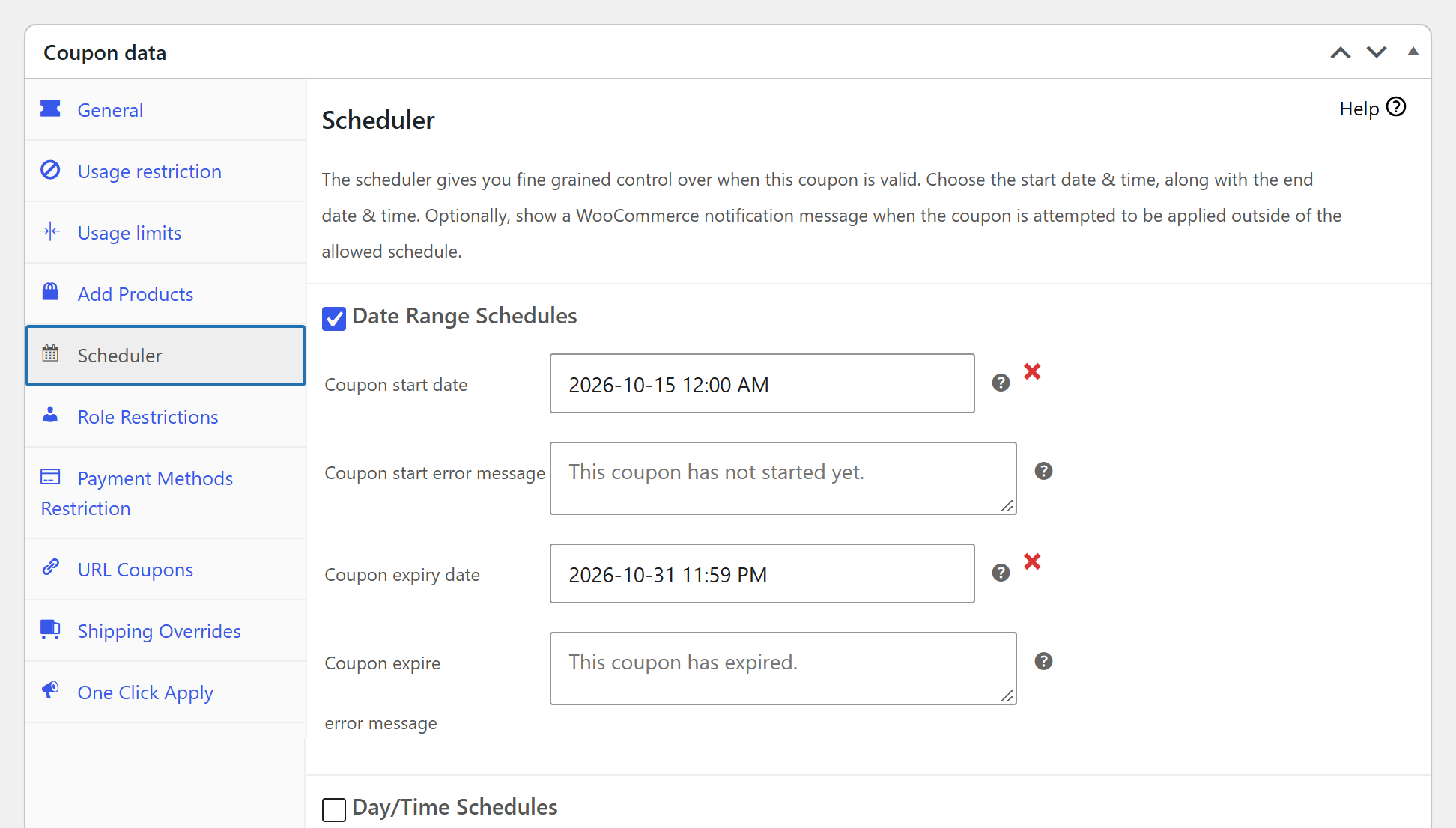
Once your coupons are ready, you don’t have to wait until launch day to switch them on. With the free Advanced Coupons plugin, you can schedule your coupons with a start date and an expiry date, so your Halloween deals go live and end right on time.
Short on time? If you use StoreAgent with Advanced Coupons, you can also try the AI coupon generator. Just click Generate with AI, describe your Halloween offer in plain language (like “15% off orders over $75”), and review the coupon it sets up for you before publishing.
5. Map out your content strategy
Unfortunately, even the best, well-thought-out campaigns can fall flat if they’re not communicated well. To avoid this pitfall, create a content calendar. This will help you stay organized and ensure each piece of content will be released at the right time. Your content calendar plots a clear schedule for your social media posts, emails, blogs, or other promotions you plan to release for Halloween.
Here are some helpful tips:
- Determine your campaign stages: If you’re running a longer sale (like a week-long campaign), break it down into phases. For example, you may have a teaser stage, a main sale, and a last-minute push.
- Leverage a mix of marketing channels: Consider sending out emails, posting on social media, using pop-ups on your website, and crafting blog posts to meet your audience where they are.
- Be consistent: Always go back to your theme and goals–ensure that messaging, tone, visuals, and copy are consistent across all content.
Need some marketing content ideas? Check out our spooktacular Halloween marketing guide below:

💡 PRO TIP: You can use tools like Buffer or Hootsuite to schedule social media posts ahead of time. Want to reach shoppers even faster? Advanced Coupons also works with PushEngage, so you can send your Halloween coupons as push notifications straight to your subscribers.
6. Optimize your website
Your website is essentially your virtual storefront. To ensure the effectiveness of your Halloween marketing campaign, you’ll want to create a smooth shopping experience that makes it easy for shoppers to claim their deals.

Set the tone for shoppers by adding Halloween-themed visuals and crafting dedicated Halloween landing pages. Custom landing pages can boost conversions, as they showcase specific products and promotions. Consider creating a landing page to highlight your best offers and limited-time bundles. Lastly, make sure to add compelling call-to-actions (CTAs) to encourage shoppers to check out.
Don’t forget your product pages! Halloween-themed sale badges and product labels help shoppers spot your deals while they browse. With Advanced Promo Kit, you can even schedule your badges to appear and disappear with your sale dates.
💡 PRO TIP: Reduce cart abandonment by using exit-intent popups that trigger when customers are about to leave without completing their purchase. Tools like OptinMonster allow you to set up targeted exit popups offering enticing deals like free shipping or bonus gifts. This serves as an extra nudge to convince them to check out.
7. Track, analyze, and optimize
Last but not least… track, analyze, and make changes from there!
Every sale is an opportunity to identify what works and what does not. To make the most of your campaign, make sure to track your performance, analyze the results, and make data-driven changes from there. Remember, running a Halloween sale also sets the stage for Black Friday and year-end promotions. So, use the insights you gain from this sale to refine your Black Friday strategy.
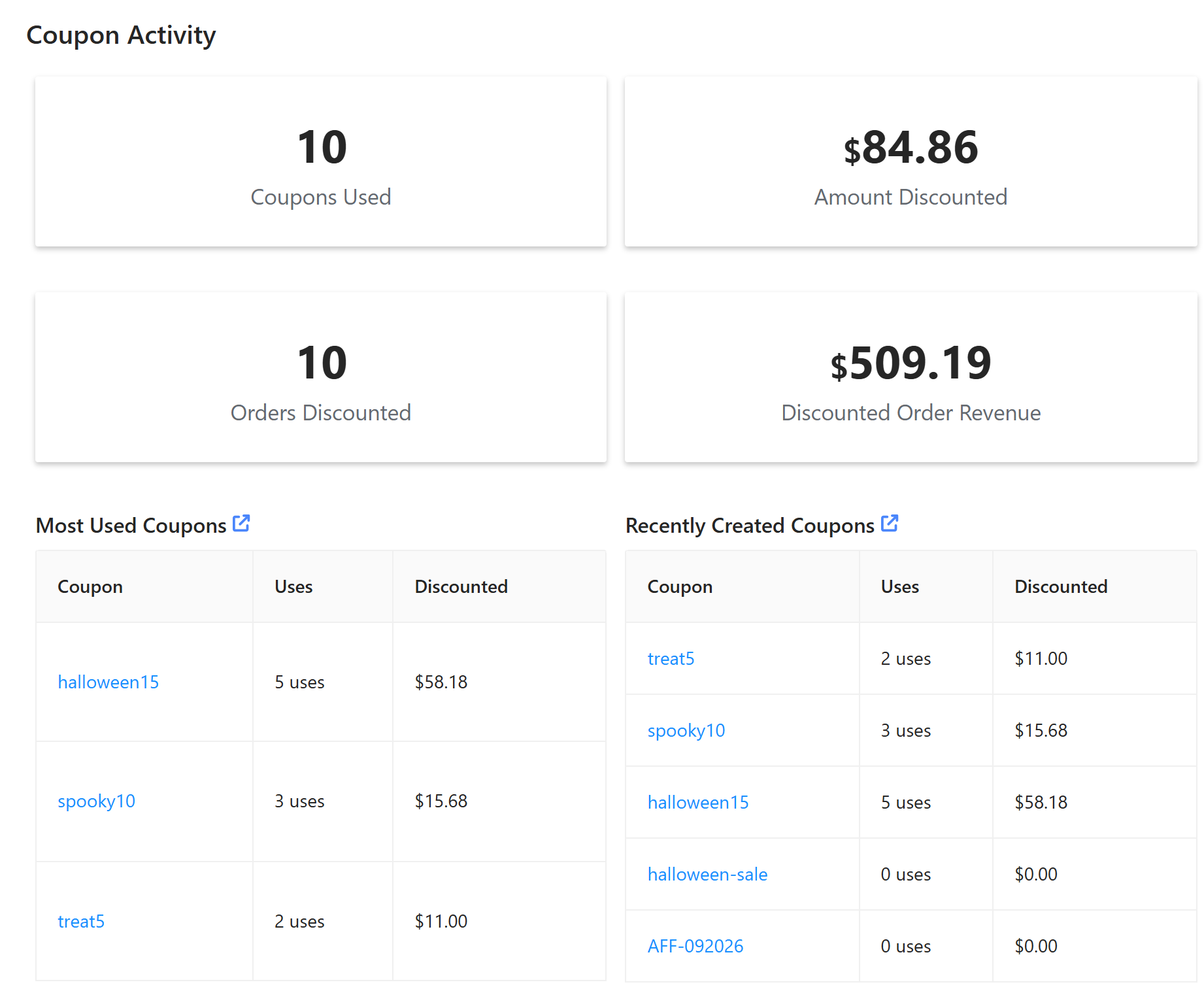
💡 PRO TIP: If you use Advanced Coupons, head to Coupons > Dashboard to see how your Halloween coupons performed. It shows the coupons used, the amount discounted, orders discounted, discounted order revenue, and your most used coupons, so you can quickly spot which deals your shoppers loved the most.
Frequently Asked Questions
How can Halloween promotions benefit your business?
Running Halloween promotions can help you engage shoppers, improve brand visibility, and boost sales as the high-traffic holiday season begins. It’s also an excellent way to gather key insights and test marketing strategies to prepare for upcoming sales events like Black Friday and holiday shopping.
What products are best to sell on Halloween?
Seasonal Halloween items like costumes, candies, and decorations can be a big hit during this sales period. In fact, the NRF expects costumes and decorations to be the top two Halloween spending categories in 2026. However, if your business doesn’t offer these products, you can still get creative and offer exclusive Halloween deals for your regular items. Key examples include offering limited edition product bundles, or Buy One Get One deals.
What are good ways to sell more on Halloween?
Business owners can leverage a mix and match of irresistible promotions like BOGO (Buy One Get One) deals, free shipping discounts, percentage discounts, and dollar-off discounts. It can also be helpful to run limited-time flash sales to create a sense of urgency among shoppers.
When should you start planning a Halloween marketing campaign?
It’s best to start planning in September, since many shoppers begin their Halloween shopping early. With Halloween on Saturday, October 31, 2026, aim to have your offers and coupons ready by early October, start your teasers in the first half of October, and launch your main sale by mid-October.
Conclusion
Running a Halloween marketing campaign can boost your sales and set the stage for successful Black Friday and year-end promotions! By following the steps we’ve outlined in this guide, you can craft a spooktacular campaign that draws shoppers in and provides you with valuable insights for your future marketing efforts. Let’s quickly recap these steps below:
- Determine your goals and metrics
- Choose a creative Halloween theme
- Set your sale dates
- Set up coupons and discounts early
- Map your content strategy
- Optimize your website
- Track, analyze, and optimize
In the process of preparing for your Halloween campaign, you can leverage tools like Advanced Coupons to make engaging, irresistible offers. This powerful plugin extends the default coupon functionality of WooCommerce, allowing you to craft advanced discounts like BOGO (Buy One Get One) deals, shipping discounts, URL coupons, scheduled coupons, and so much more!
We hope this article helped you out. Got any questions for us? Let us know in the comments!