

Store credit is a virtual balance a store gives a customer to spend on future purchases at that same store. It works like a gift card or account credit: the customer holds a set dollar value they can redeem at checkout, but only with the business that issued it.
In this guide, we’ll cover how store credit works, the main types you can offer, the benefits for your business, and practical ways to use it to encourage repeat purchases.
What Is Store Credit?
In ecommerce, store credit is often used as an alternative to cash refunds, a customer service gesture, a loyalty reward, or a gift card balance. For store owners, it can help preserve revenue while giving customers a flexible reason to return and make another purchase.
How Does Store Credit Work?
When you issue store credit, you’re essentially providing your customers with a “digital balance” equivalent to a specific dollar amount. This balance can be used for future orders, encouraging them to shop in your store again.
While store credits are often used as an alternative to traditional refunds, they offer more flexibility and benefits for your store. Here are some key differences:
- Store credits are limited to your store: Unlike other types of refunds, store credits issued by your business cannot be used in other stores.
- They encourage customers to keep coming back: Since store credits can only be redeemed in your store, they encourage shoppers to return and spend their balance with your business.
- Can be combined with other types of promotions: Depending on your store’s policy, customers can stack store credits along with discounts, coupons, and other promotions.
For WooCommerce stores, using a dedicated WooCommerce store credit plugin gives you a practical way to issue, track, and let customers redeem store credit directly in your store.
Types Of Store Credit
We’ve answered what is store credit, but do you know it comes in different types? Yup! One of the biggest advantages of store credits is their flexibility. As a store owner, you can use store credits in multiple ways to enhance the customer shopping experience and drive more sales for your business. They’re also an excellent way to build brand loyalty and keep customers engaged.
Let’s look into the most common types of store credits below and how they can help your store grow.
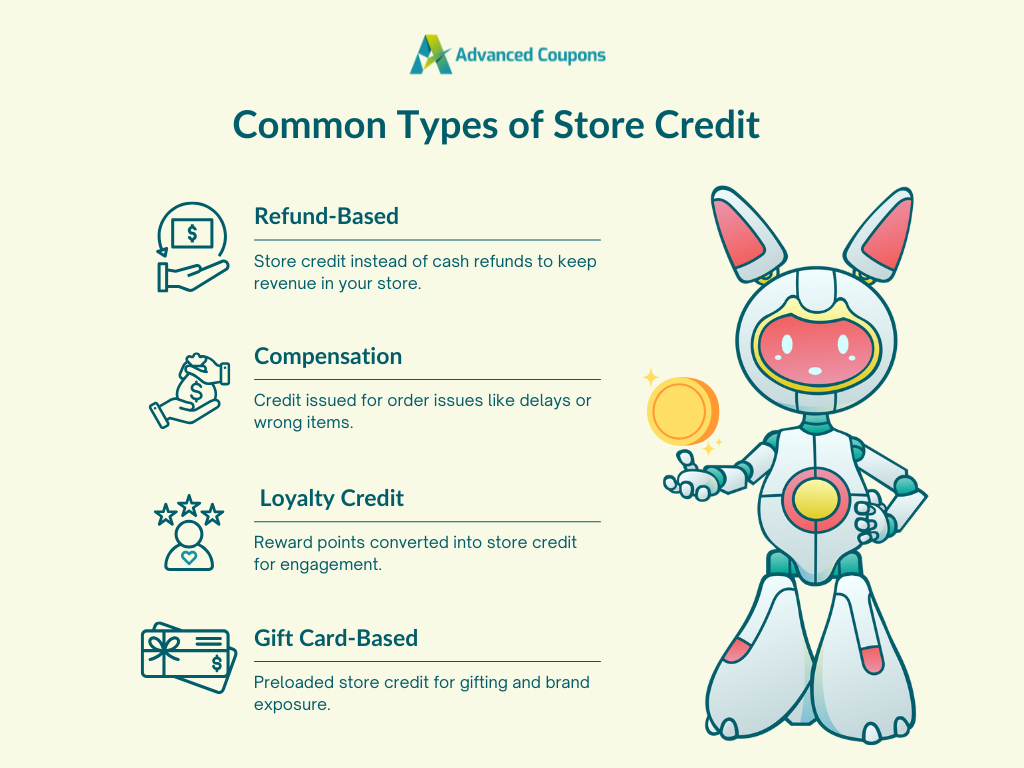
1. Refund-based store credit
This is one of the most common forms of store credit–offering them as a refund alternative.
Instead of issuing a cash refund, you can grant customers store credits instead. It’s more beneficial for your business as it keeps the money in your store, while also encouraging customers to purchase again. Often, this is also simpler and quicker to manage than processing refunds through different payment methods.
2. Compensation store credit
Unexpected mistakes can happen during order fulfillment. Orders can get delayed, items can get damaged, or wrong products may be shipped. Issuing store credit as compensation can be an effective way to turn a frustrating experience into a positive one. By offering something of tangible value to shoppers, you show that you value their loyalty and time.
3. Customer loyalty credit
Some loyalty programs reward customers with points they can exchange for store credits. Incentivizing different customer actions can encourage customers to keep engaging with your business. For instance, with WooCommerce Loyalty Program, you can reward actions like product reviews and customer sign-ups with points.
4. Gift card-based store credit
Another smart way to use store credit to grow your store is by offering them as gift cards. Gift cards typically come preloaded with store credits that shoppers can redeem for purchases in your store. They’re highly popular gifting options for shoppers, especially during holidays and special occasions. Since customers can gift these cards to friends and family, they’re an excellent way to spread the word about your brand.
What Are The Benefits Of Issuing Store Credit?
Now that we’ve answered what is store credit, let’s look into the key benefits it offers store owners.
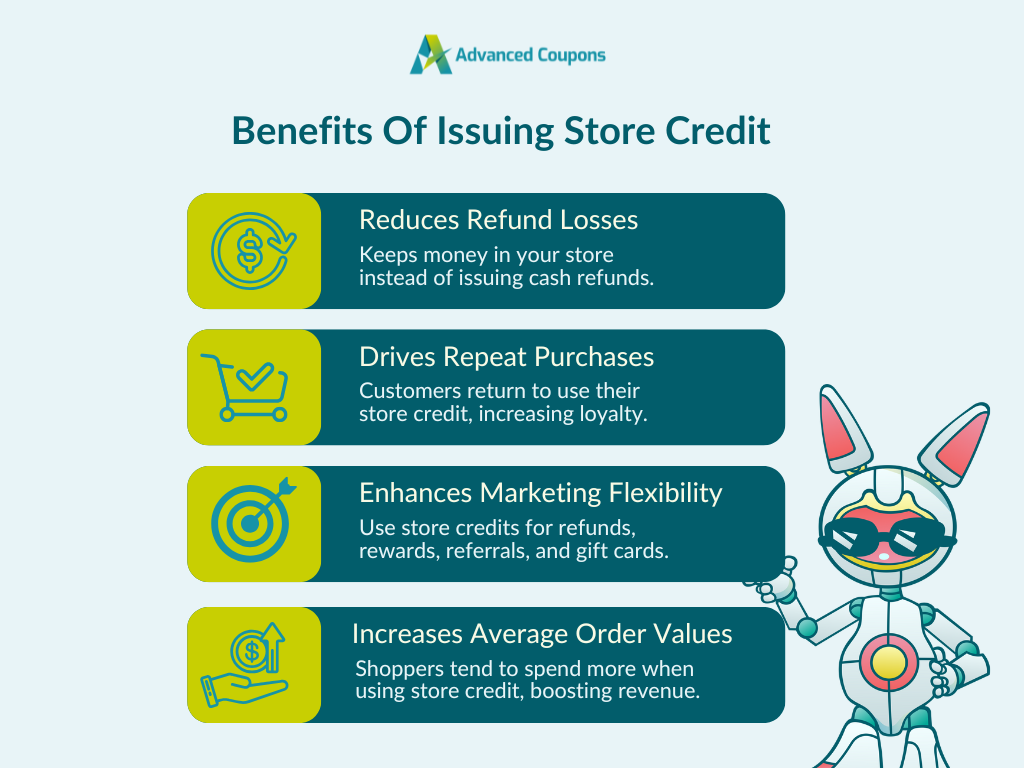
1. Reduces revenue loss on refunds
Absorbing the cost of refunds and returns can be challenging, especially for smaller retailers. According to industry insights, US consumers returned 16.5% of their purchases in 2022, costing businesses a whopping $816 billion in lost revenue. This highlights the significant impact of refunds on your bottom line.
Offering store credits can help reduce these losses by keeping the money within your business. It’s also a great way to improve the customer experience and keep shoppers coming back, which leads us to the next benefit…
2. Drive repeat purchases
To put it simply: customers who receive store credits are more likely to return to your store to use that credit. When this credit is granted for a refund or compensation, you also get a second chance to create a better shopping experience for your customers. Overall, this can help you improve customer satisfaction levels and foster long-term loyalty.
3. Provides flexibility in your marketing strategies
Store credits offer immense flexibility–they can be granted for refunds, rewards, and even gift cards! There are several ways you can incorporate this into your marketing strategy to boost your sales and engage your customers.
For example, you can grant store credits to reward loyal customers as they reach higher tiers in your loyalty program. Likewise, you can grant them to successful referrers who successfully bring in new buyers to your store. You can also sell themed gift cards (that grant store credits) as part of seasonal promotions or special events.
4. Encourages higher average order values (AOV)
Issuing store credits to customers can also lead to higher average order values. It’s a psychological thing–when shoppers have extra store credits to spend, they see this as “free money”, making them more likely to add items to their cart.
This is especially evident when store credits are issued as gift cards. According to industry research, 68% of shoppers who redeem gift cards end up spending more than the card’s value! On average, shoppers spend $31.75 more than the card’s value. That’s good news for your bottom line!
How To Use Store Credit To Boost Sales
Now that we’ve answered the question, “what is store credit?” and learned about its advantages, you’re likely excited to incorporate it into your own marketing strategy! So, in this section, we’ll reveal actionable strategies you can use to leverage store credits to improve the shopping experience.
1. Improve your return policy using store credits
Offering a customer-friendly returns policy is a key factor in enhancing the customer shopping experience. According to an industry survey, 92% of customers would buy from a business again if the return process was easy. Issuing store credits is a simple yet powerful way to make your returns policy less daunting for your buyers.
💡 TIP: You can make this more appealing by offering an extended return window for customers who choose store credits over cash refunds. For example, if your standard return policy allows for 30 days, consider extending it to 60 days for store credit returns.
2. Drive customer engagement with gift cards
Selling digital gift cards in your store provides a convenient way for customers to “share store credit” that can be redeemed for future purchases. They’re popular last-minute gifting options during holidays and special occasions. Additionally, they help new customers discover your brand.
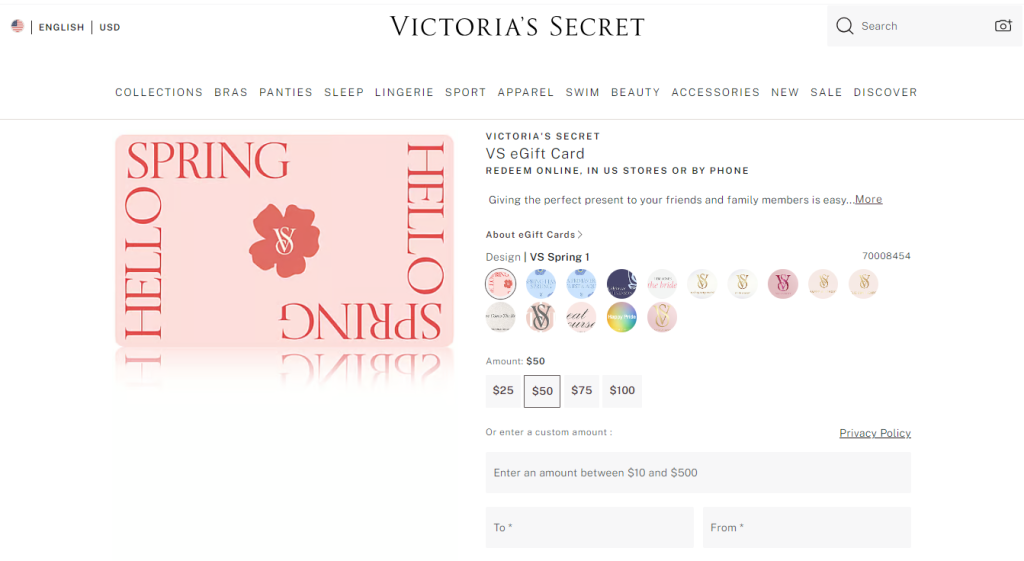
Apart from selling themed gift cards, you can explore other promotional strategies to drive more engagement. For instance, you can run gift card giveaways. Encourage customers to like, share, or comment on your social media posts for a chance to win a gift card. This can help generate a buzz about your store and drive traffic to your website.
3. Reward customer loyalty
Consider implementing a store-credit-based loyalty program to reward customers and keep them coming back.
Fortunately, setting up a loyalty program is now a lot easier with today’s tools and plugins. WooCommerce store owners, for instance, can use the WooCommerce Loyalty Program plugin to set up a rewards and points system in their store.
This powerful plugin lets you reward customers with points they can redeem for store credits when they make a purchase, leave a review, register as customers and so much more. It also comes with a full admin dashboard, giving you full visibility and control over your loyalty program.
4. Use store credits for win-back campaigns
Customer churn is one of the biggest challenges business owners face. It’s when customers completely stop doing business with a company, which impacts your revenue negatively. This is where win-back campaigns can help, and store credits can be a powerful tool in your arsenal.
Start by identifying customers who haven’t made a purchase in several months. You can then send them a personalized win-back email with a store credit offer. Make your email more enticing by using email template creators to showcase what’s new–you can add new arrivals, or suggest products that match their purchase history.
TIP: Adding urgency to your win-back campaign can make it more effective. Consider setting an expiry date for winback store credits. For example: “Use your $15 store credit within the next 10 days before it expires!”
5. Grant store credit in referral programs
Implementing a referral program incentivizes loyal customers to spread the word about your business, bringing in new shoppers to your store. Store credits are one of the most effective rewards to encourage shoppers to actively promote your brand.
Consider issuing store credit rewards to existing customers who successfully refer a family or friend to your store. For example, you can offer $20 worth of store credits for every successful referral. At the same time, you can grant the referred customer a welcome store credit bonus, such as $10 off their first order. This makes the process rewarding to everyone involved!
6. Incentivize customer reviews with store credits
According to industry insights, 95% of customers read online reviews before purchasing from a brand. This proves how important reviews are when it comes to building credibility and influencing purchase decisions. Unfortunately, not all customers take the time to leave reviews.
To encourage more reviews, consider offering store credits as a reward. This strategy not only increases customer reviews but also improves customer retention. With store credits earned, shoppers have more reasons to return to your store.
You can also integrate this strategy into your loyalty program. With plugins like WooCommerce Loyalty Program, you can grant reward points automatically when customers leave a product review.
7. Recover abandoned carts with store credit
Cart abandonment is a pressing issue for all ecommerce stores, with cart abandonment rates averaging at a whopping 70.19%! Offering store credits is one of the best ways to tap into this huge missed opportunity.
With tools like Drip, you can send automated emails to shoppers who abandon their carts. In these emails, you can remind them of the product they left behind and offer a store credit bonus to nudge them toward checkout.
How To Set Up Store Credit In WooCommerce (Step-by-Step)
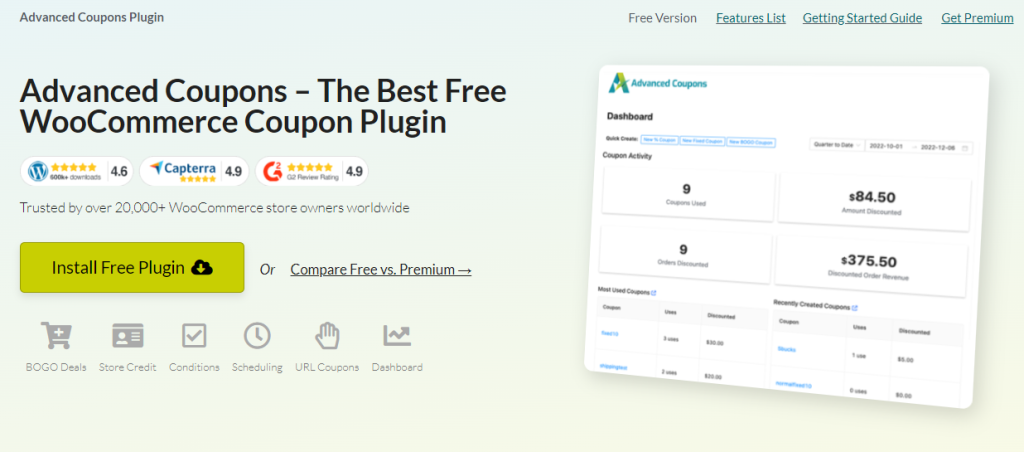
One of the easiest ways to set up store credit in WooCommerce is by using the free Advanced Coupons plugin. It gives you full control to grant, manage, and track store credits directly within your WooCommerce dashboard.
With this free plugin, you can extend WooCommerce’s default coupon functionality and easily grant store credits to WooCommerce customers, allowing them to redeem credits during checkout.
Easy store credit management
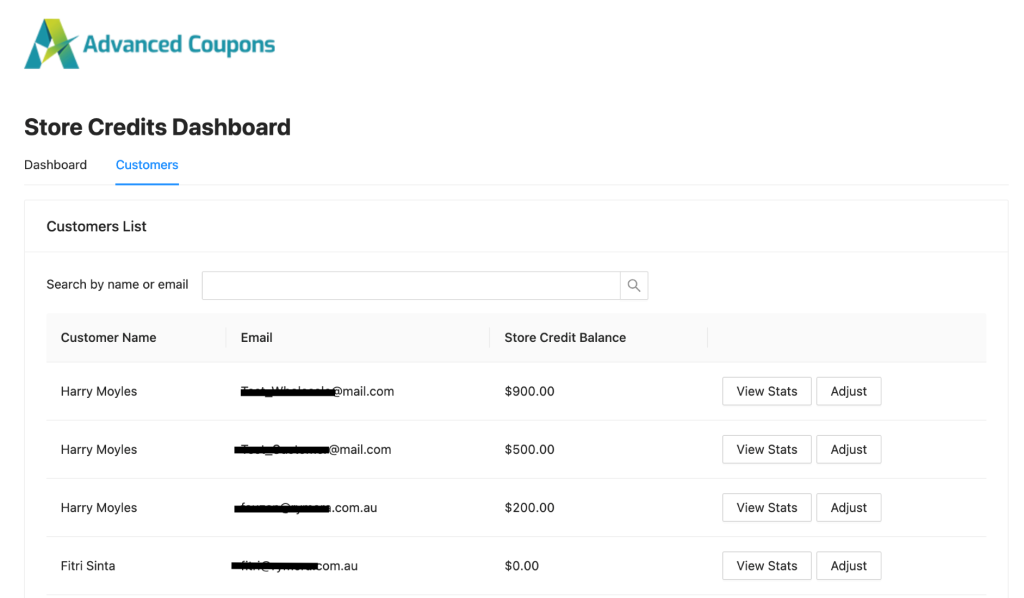
With Advanced Coupons, you gain access to a Store Credits Dashboard that provides a clear overview of all issued, unclaimed, and used credits. The Customer tab lets you manage individual customer balances. You can even adjust store credit amounts directly, which comes in handy for store owners.
📝 Bonus Tip for B2B Stores: If you operate a wholesale business where clients order against an active line of credit rather than prepaying, you will also need a way to manage buyer risk. Setting up a Credit Limit Restriction is a smart way to ensure your wholesale customers cannot exceed their maximum allowed spending balances.
Manage refunds seamlessly
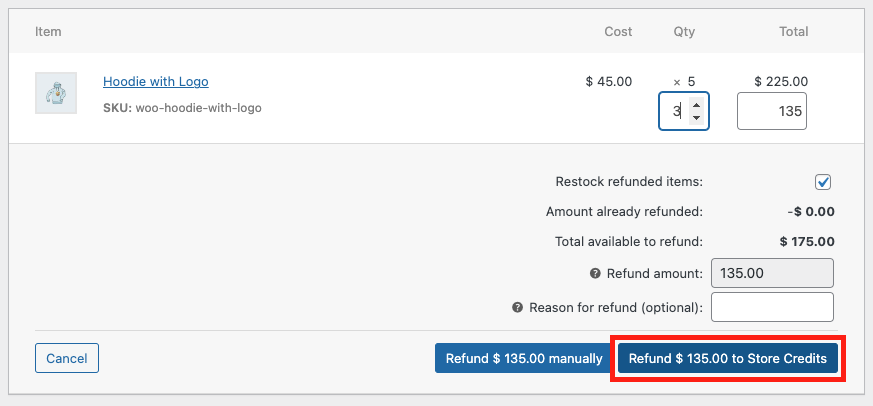
Using this plugin, you can also issue refunds as store credits. It’s a more flexible and convenient option, allowing you to keep revenue within your store and encourage customers to keep shopping with you.
Frequently Asked Questions
Is store credit real money?
No. Store credit is a virtual balance with a set dollar value, but it is not the same as cash. Customers can use it for purchases, but only within the store that issued it.
Is store credit the same as a refund?
No. Store credit can be used as a type of refund, but instead of returning money to the customer’s original payment method, the store issues a redeemable balance the customer can spend later in the same store.
How does store credit work?
The store assigns the customer a digital balance equal to a specific dollar amount. The customer can then redeem that balance at checkout, where it is applied toward the order total.
Conclusion
Leveraging store credits on your online store can help you enhance the customer shopping experience and grow your business. We’ve answered the question “what is store credit?” in this guide and walked you through everything you needed to know, including:
- What is store credit?
- How do store credits work?
- Types of store credits
- Benefits of issuing store credits in your store
What’s more, we unveiled some key strategies you can incorporate to leverage store credits, including:
- Improving your return policy
- Driving customer engagement using gift cards
- Rewarding customer loyalty
- Using store credits for winback campaigns
- Leveraging store credits in your referral program
- Incentivizing customer reviews with store credits
- Recovering abandoned carts with store credits
Plugins like Advanced Coupons make it easy for you to grant store credits in your WooCommerce store. With this plugin, you can grant store credits, manage them using an intuitive dashboard, and offer them for refunds.
We hope this article helped you out! Do you have any questions? Let us know in the comments section below!