

Coupons can be great for driving sales, rewarding loyal shoppers, and helping hesitant buyers convert. But when they’re left too open, they can also become one of the easiest ways to lose margin in WooCommerce.
A private code gets shared in a Facebook group. A welcome offer is reused across multiple accounts. A stacked discount combination quietly cuts deeper than intended. By the time store owners notice, the loss has often been happening for weeks.
Policy abuse is a major issue for online stores. Merchant Risk Council reported that 90% of online retailers consider policy abuse a significant problem, with global losses estimated at around $100 billion. Coupon misuse is one of the ways those losses show up in everyday store operations.
In this guide, we’ll walk through the most common types of WooCommerce coupon fraud, practical ways to reduce abuse, and a few warning signs to watch for before a leaked or overused promo starts eating into your margins.
What Is Coupon Fraud?
WooCommerce coupon fraud happens when shoppers intentionally use discount codes or promotional offers in ways that go beyond what the store owner intended. That can include creating multiple accounts to reuse a welcome offer, stacking coupons beyond the intended discount, sharing a private code publicly, or exploiting referral and checkout loopholes.
This kind of abuse can quietly drain revenue, distort campaign results, and make it harder to measure whether a promotion is actually working. For stores that rely on discounts to convert and retain customers, even a small amount of repeat misuse can chip away at margins over time.
Why WooCommerce Coupons Are Easy To Abuse By Default
WooCommerce gives store owners a solid starting point for creating discounts, but its default coupon setup is built for flexibility, not deeper abuse prevention. If a coupon is left too open, it can be easier than expected for shoppers to reuse, share, or combine it in ways that go beyond the original intent.
This is especially important for stores running welcome offers, loyalty rewards, referral promos, or limited-time campaigns. Without clear limits in place, one shared code or repeated signup can quietly chip away at margins before the issue is spotted.
Some of the most common weak points include:
- Shared coupon codes: A single public-facing code is much easier to pass around than a unique one-time code.
- Loose usage settings: If redemption caps, expiry dates, or customer restrictions are not configured carefully, shoppers may be able to reuse the same offer more than intended.
- Overly broad eligibility: Promotions meant for specific customer groups can spread beyond the intended audience when role, email, location, or cart restrictions are missing.
- Unmonitored discount behavior: If coupon usage is not reviewed regularly, unusual spikes and suspicious patterns can go unnoticed for too long.
That does not mean WooCommerce coupons are inherently risky. It simply means the real protection comes from how your discounts are structured. The stronger your restrictions and workflows are, the harder it becomes for coupon abuse to grow into a bigger margin problem.
Most Common Types Of Coupon Fraud
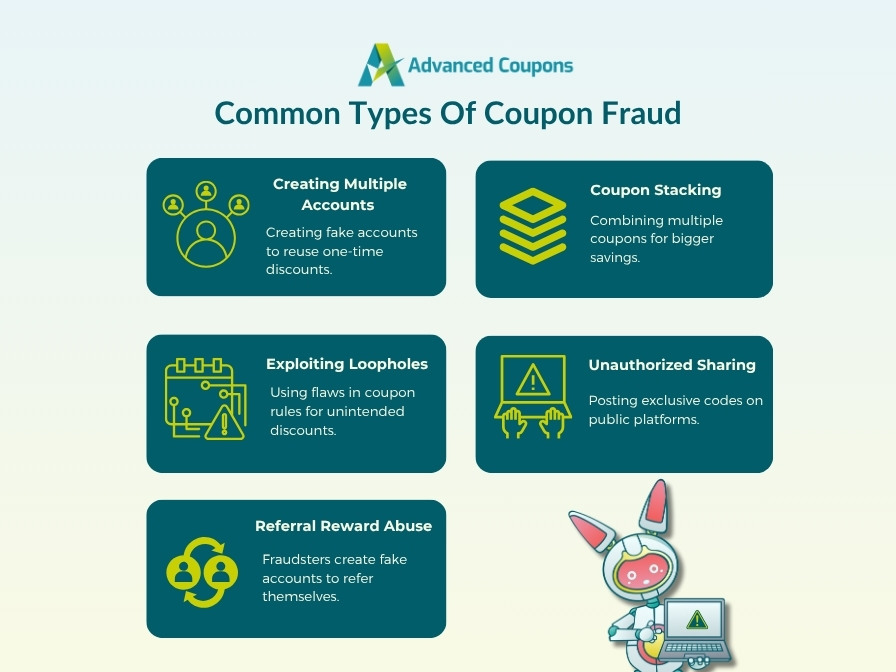
Coupon fraud can range from minor misuse to intentional, calculated attempts to exploit your store’s discount system. Here are some of the most common types of coupon misuse you should be mindful of as a store owner:
1. Creating multiple accounts for discounts
This is one of the most common types of discount fraud, where customers sign up using multiple accounts to repeatedly claim one-time-use discounts. Beyond revenue loss, this has a negative impact on your customer analytics.
A surge in fraudulent accounts may lead you to believe that your campaigns are performing well, resulting in misguided marketing efforts. Since these fake accounts don’t contribute to long-term customer retention, they can devalue your promotional efforts over time.
2. Coupon stacking abuse
Coupon stacking occurs when customers use multiple coupons or discount codes on a single purchase. While this can be an effective tactic to boost sales, it can lead to revenue loss if not managed properly. For example, a shopper might combine a free shipping offer, a 15% off coupon, and store credit redemption to drastically reduce the order total.
3. Exploiting loopholes in discount rules
More advanced threat actors actively search for vulnerabilities they can exploit in your store’s coupon setup. Loopholes can result due to improperly configured discount rules, technical errors, or gaps in coupon restrictions. This is why testing your coupons before launching any promotion is highly recommended.
4. Coupon sharing on unauthorized platforms
Some customers may share their exclusive discount codes on forums, social media, and unauthorized third-party websites. This allows unintended shoppers to take advantage of your exclusive offers, resulting in revenue loss. What’s more, it undermines the value of your promotions and hurts your relationship with customers who genuinely qualify for the discount.
5. Exploiting referral rewards
Referral coupons and perks are a great way to encourage existing customers to spread the word about your brand and bring in new shoppers. Unfortunately, some customers exploit this system. They create multiple fake accounts and refer themselves to redeem referral discounts and bonuses. This form of coupon abuse messes with your referral program insights and drains your marketing budget.
If you’re running a referral promotion, it can help to set up a verification system to prevent promotion abuse. For instance, you can require email or phone verification before referral bonuses can be redeemed.
What We’ve Seen: One pattern we’ve seen with stores running welcome offers, BOGO deals, or referral promos is that the code often spreads faster than expected—sometimes within a day or two of launch. The goal isn’t to stop running promotions. It’s to build them with enough restrictions that one shared code or repeated signup doesn’t open the door to wider abuse.
How To Prevent Coupon Fraud In WooCommerce
Now that we’ve walked you through the most common types of coupon fraud, it’s time to focus on prevention. While tackling this challenge seems daunting, implementing the right tools and strategies can help you safeguard your eCommerce store. So, let’s dive right in!
1. Generate unique, hard-to-crack coupon codes
Generic coupon codes like “WELCOME10” or “SAVE20” are much easier to crack, share, and abuse. One of the simplest ways to prevent coupon misuse is by creating unique codes for your promotions. These codes are tied to specific customers or campaigns, making them harder to exploit.
Tools like Advanced Coupons make it easy to generate unique coupon codes for your campaigns. With its bulk coupon feature, you can easily create multiple coupon codes for a specific promotion. This allows you to:
- Generate unique coupon codes for each customer to avoid unauthorized sharing.
- Run exclusive campaigns with confidence.
- Track the performance of each coupon to assess the effectiveness of your campaigns.
Want to learn more about generating bulk coupon codes in WooCommerce? Check out our full guide here. 👉
2. Set redemption limits
Without redemption limits, one coupon code can be used repeatedly, increasing the chances of abuse. By setting redemption limits, you can control the number of times your code can be used and protect your store. For instance, you can choose to:
- Limit coupon usage per shopper: Allow your buyers to redeem a coupon code only once.
- Set a total redemption cap per coupon: Set a total number of times a specific coupon can be used–also great for creating a sense of urgency and scarcity.
- Restrict by time frame: Only allow coupon usage for a specific period, such as during a flash sale or holiday period.
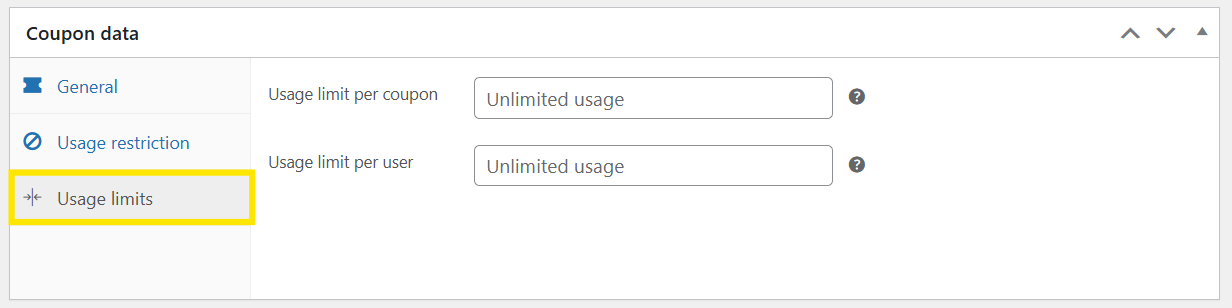
By default, WooCommerce store owners can set Usage Limits per customer and per coupon:
However, if you want more control over your restrictions, you can use plugins like Advanced Coupons. Our plugin allows you to set coupon schedules, role restrictions, payment method restrictions, and so much more.
3. Monitor coupon usage analytics regularly
Keeping an eye on your coupon analytics not only helps you assess the performance of your campaigns. It’s also a great way to spot coupon abuse! With regular monitoring, you can easily notice unusual coupon redemption patterns and spikes in coupon usage that may indicate fraud.
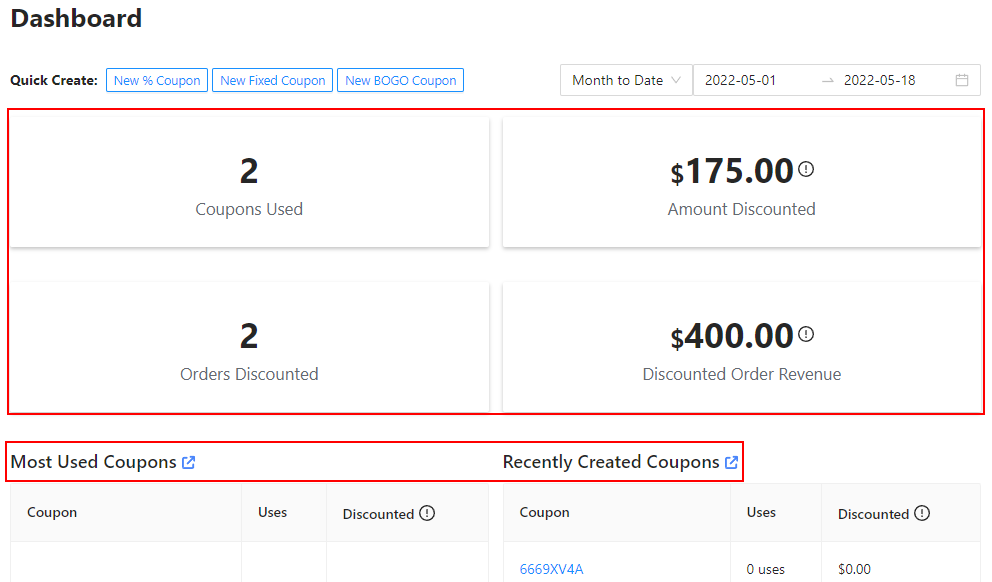
Thankfully, most coupon solutions offer reporting and analytics features to help you track and analyze these insights in real time. Advanced Coupons, for instance, provides you with a comprehensive dashboard that summarizes coupon usage in your WooCommerce store. It showcases important information, including the number of coupons used, orders discounted, top-performing coupons, and more:
4. Limit discount combinations (coupon stacking)
Coupon stacking allows shoppers to combine multiple coupons in a single order. While it may seem like a great tactic to boost sales and enhance engagement, it can eat into your profit margins when not managed properly. To make your promotions profitable (and fair), consider limiting coupon stacking.
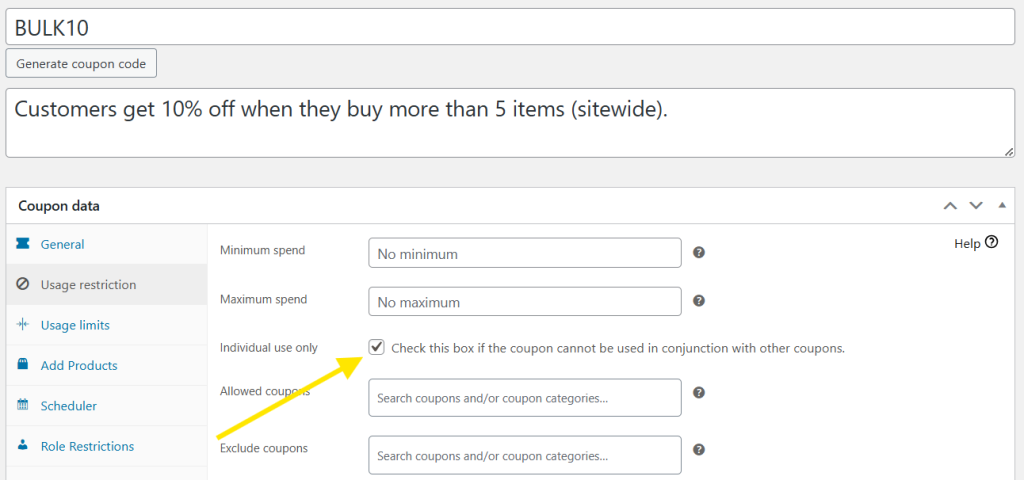
💡POWER TIP: When making coupons in WooCommerce, you can tick the option “Individual Use Only” under Usage Restrictions. This prevents your coupons from being used alongside other coupons, giving you more control over your discounts.
5. Set reasonable expiry dates
Setting coupon expiration dates might seem like a basic step, which is exactly why it’s on our list! Coupons with overly long validity periods are more likely to be shared and exploited on unauthorized platforms. By limiting coupon validity, you protect your store and create a sense of urgency that encourages shoppers to act quickly.
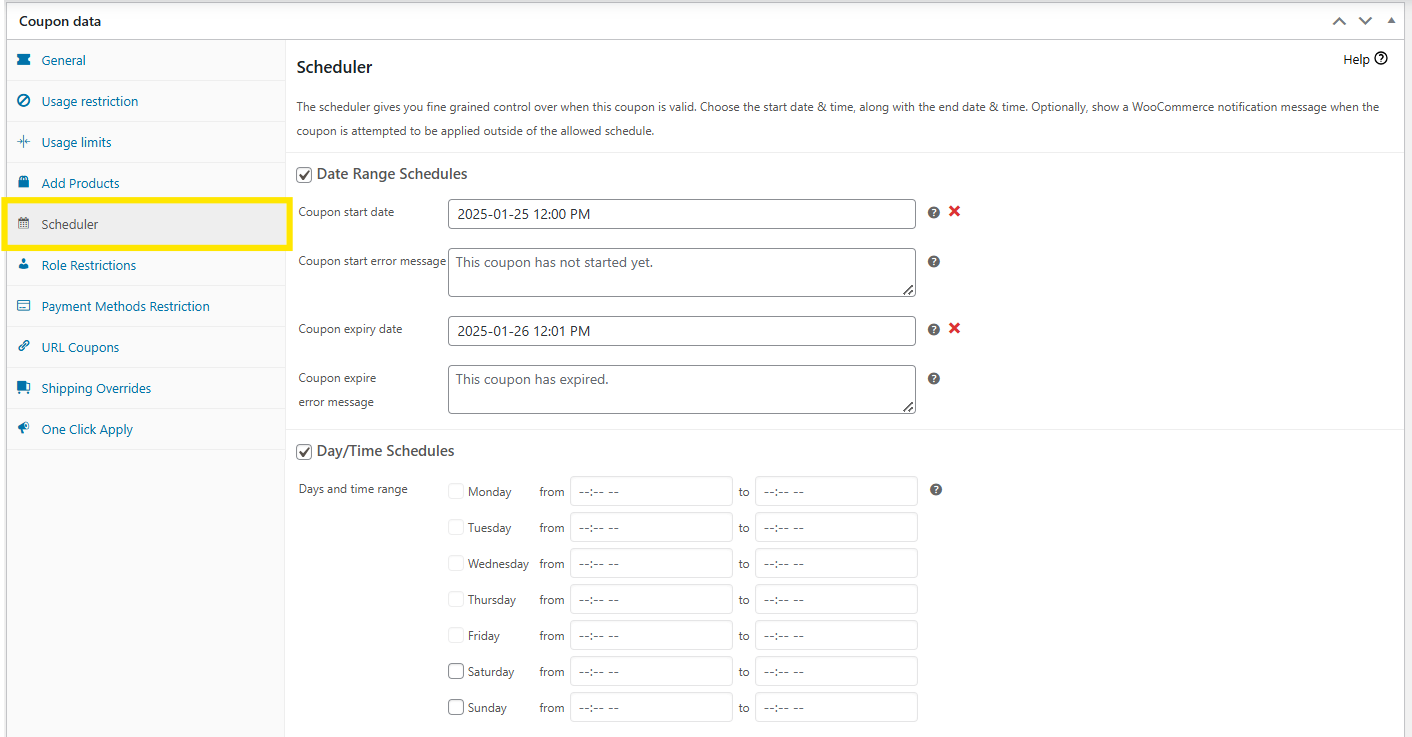
If you want to take it a step further, you can set coupons to be valid only on certain dates and times. This works well for exclusive, time-sensitive promotions, such as flash sales or event-tied campaigns. With tools like Advanced Coupons, you can easily set coupon validity down to the last minute and hour:
6. Implement cart conditions
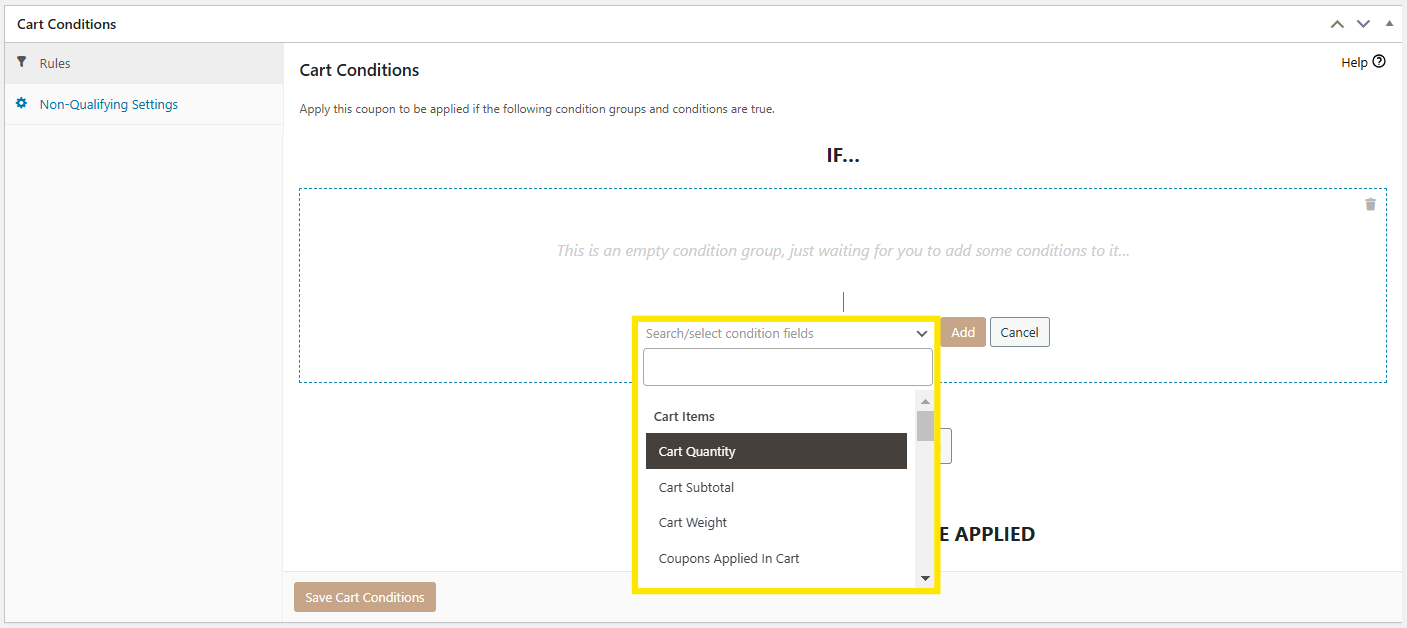
Cart conditions allow you to set specific criteria before a coupon can be applied. Depending on your campaign, this may entail setting minimum spend requirements, customer role restrictions, or product-specific limitations. For example, you may want to require a minimum spend of $50 before granting a free shipping coupon.
This powerful feature gives you an additional layer of control, ensuring coupons are used only as you intended. Here are more examples to consider:
- Make coupons exclusive to certain products or categories: Make coupons exclusive only for certain products or product categories–perfect for promoting underperforming products or seasonal items!
- Add account requirements: Require customers to have an account or log in to use coupons.
- Implement cart quantity conditions: Offer discounts based on the quantity of items purchased. This works especially well if you serve bulk buyers.
📝 NOTE: By default, WooCommerce allows you to set basic coupon restrictions like minimum spend and maximum spend. However, you can use tools like Advanced Coupons to unlock advanced cart conditions like cart quantity, cart subtotal, allowed customer user role, and so much more!
7. Restrict coupon use by payment method
Some payment methods, such as cash on delivery (COD) or less secure payment gateways, are more likely to be abused by coupon fraudsters. This is why setting payment method restrictions is one effective way to reduce coupon abuse.
By restricting coupon use only to verified payment methods (such as credit cards or digital wallets), you gain more control over who can redeem your promotions. It’s also a smart way to protect your business from fake orders and unpaid transactions. If you run a multi-vendor marketplace, this same kind of abuse can spread further, since WooCommerce spam orders placed through a shared checkout can hit several vendors from a single bad actor.
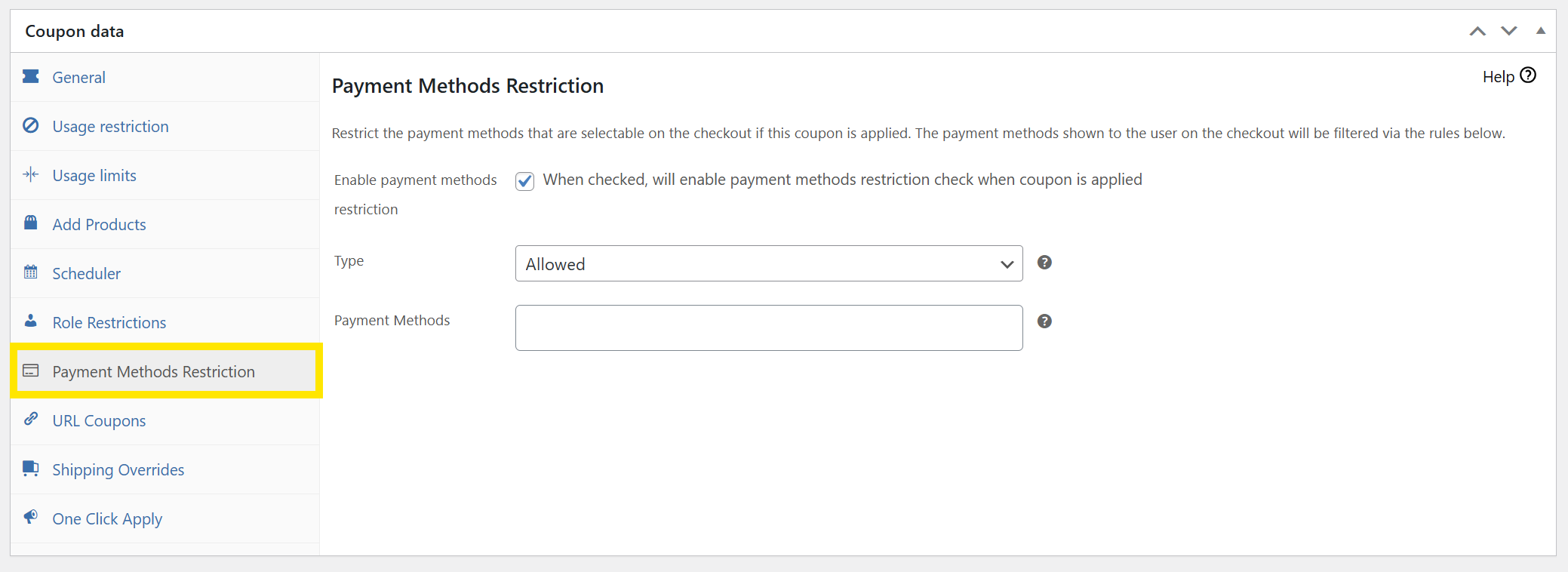
WooCommerce store owners can use Advanced Coupons to easily set up payment method restrictions for coupons. With this plugin, you can allow coupon redemption only for set payment methods and combine them with cart conditions to create more targeted and secure campaigns.
8. Limit promotions to certain shipping zones
When researching how to prevent coupon fraud, this tip is often overlooked but effective: restricting promotions to specific shipping zones. It’s even more crucial if you serve multiple regions or ship internationally.
Let’s say you’re running a local free shipping promotion or exclusive discounts to customers within a certain region. Without location-based restrictions in place, shoppers from outside your intended zone might discover and use your coupon. This can lead to higher order fulfillment costs, which can eat into your margins.
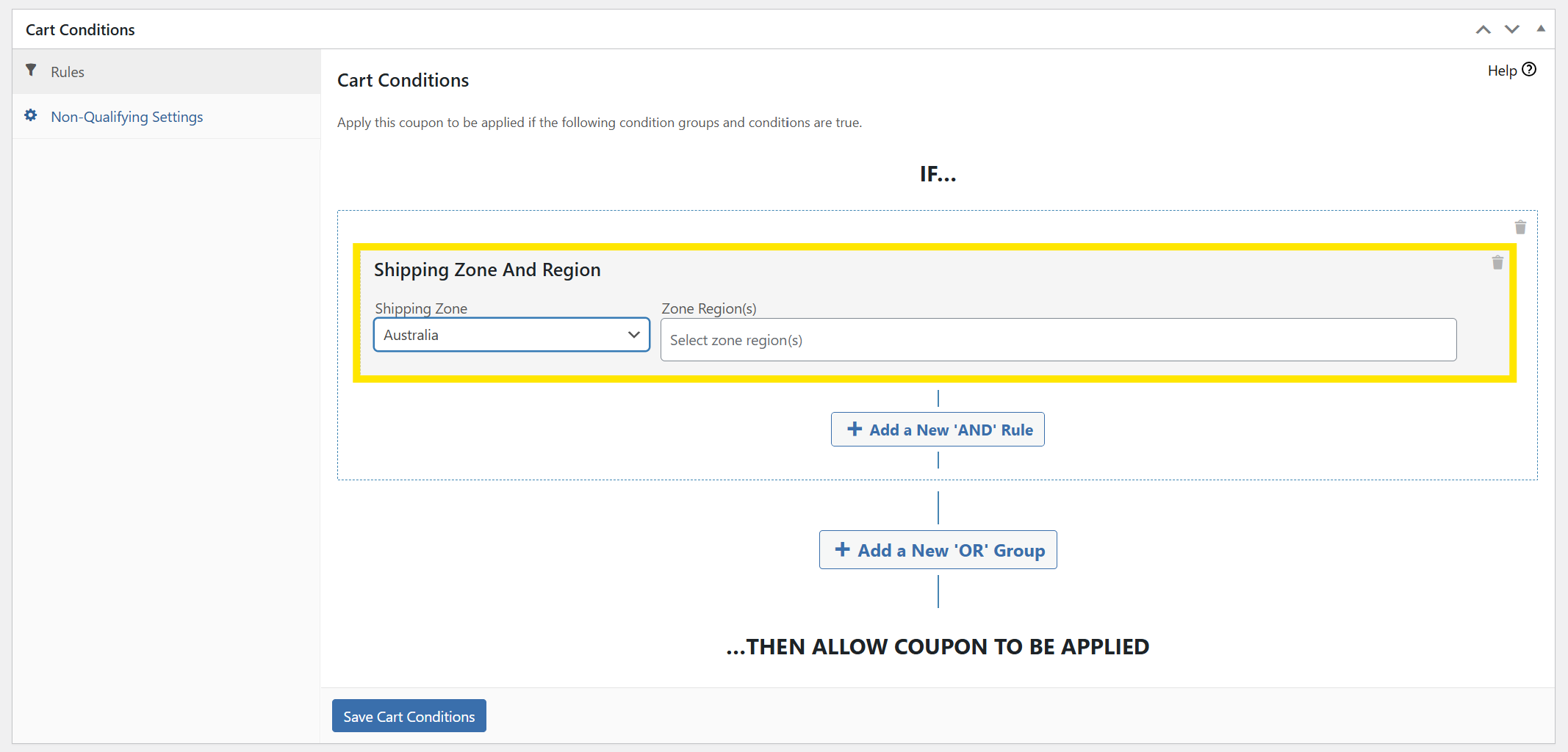
💡 GOOD TO KNOW: Advanced Coupons allows WooCommerce store owners to restrict coupons based on shipping zone and region through cart conditions.
9. Target verified shoppers only
Another simple way to prevent coupon abuse is by limiting coupon redemptions only to verified or logged-in users. Shoppers who haven’t confirmed their identity are more likely to exploit coupons. For instance, a shopper might make multiple guest checkouts to redeem an unrestricted “first-order” promo.
Most retail brands tie their welcome discounts to account creation, newsletter sign-ups, or loyalty program registration. This way, only verified users can access exclusive welcome promos.
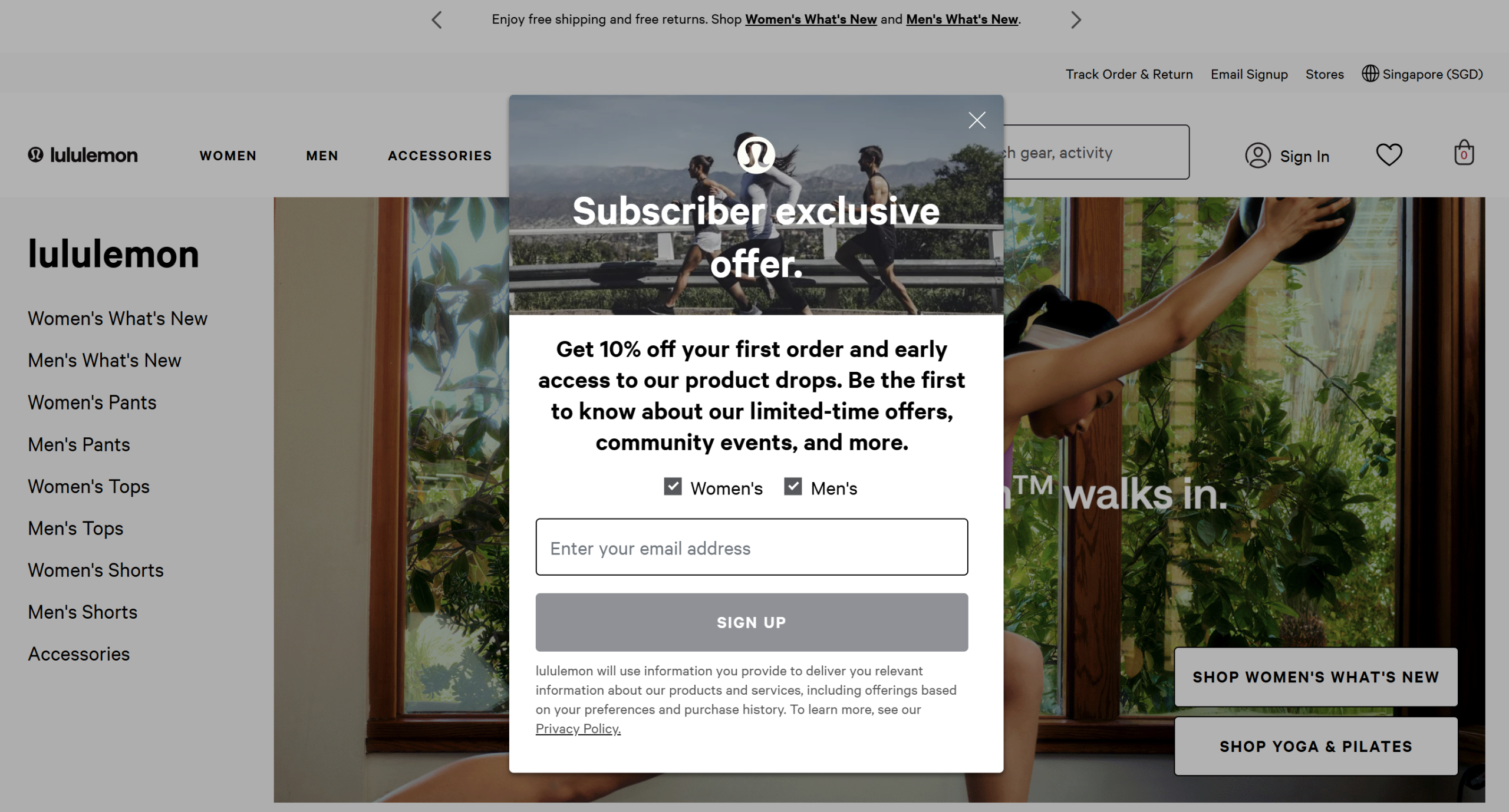
In WooCommerce, you can easily set up this type of restriction with Advanced Coupons. It extends the default coupon features of WooCommerce, allowing you to:
- Set allowed emails and customers for discounts
- Create role restrictions for your promotions (e.g., Wholesale, VIP)
- Require shoppers to be logged in before redeeming coupons
- Combine verification with other cart conditions like shipping zone, cart subtotal, and more
How To Spot Coupon Abuse In Your WooCommerce Store (Common Red Flags)
Even with coupon restrictions in place, it’s still worth watching for patterns that suggest a promo has gone wider than intended. These are some of the red flags we’ve seen store owners catch too late.
- Sudden spikes in redemptions: If coupon usage jumps unexpectedly outside a live campaign window, the code may have been shared on public coupon sites, forums, or social posts.
- High return rates after discounted orders: A pattern of discounted purchases followed by quick returns can point to shoppers exploiting perks, store credit, or first-order incentives without becoming real customers.
- Clusters of new accounts using similar email formats: This can be a sign that someone is trying to get around per-customer limits or repeatedly claim a new-buyer offer.
- Unusual referral activity: Multiple referrals tied to the same user or buying pattern can suggest self-referral abuse.
- Restricted coupons used by the wrong audience: If a code meant for a specific customer group, region, or campaign shows up in unrelated orders, it has likely been shared more broadly than planned.
💡 POWER TIP: A simple habit that helps here is checking your coupon reports regularly. Advanced Coupons includes dashboard reporting, which makes it easier to spot unusual redemption behavior before a leaked or misused code turns into a bigger margin problem.
When Coupon Restrictions Start Hurting Conversions
Adding coupon restrictions is important, but there is also a balance to strike. If the setup becomes too restrictive or confusing, legitimate customers may end up hitting friction at checkout instead of smoothly redeeming the offer they expected.
That matters more than it might seem. According to Drip, 46% of shoppers abandon their cart when a discount code does not work. In other words, a coupon setup that feels unclear or overly strict can protect margins on one side while quietly hurting conversions on the other.
Some of the most common issues to watch for include:
- Restrictions that do not match the promotion: For example, advertising a broad offer while quietly attaching narrow conditions that shoppers do not expect.
- Too many rule layers at once: Stacking cart conditions, role checks, payment restrictions, and expiry rules can make valid coupons harder to redeem than intended.
- Not testing the coupon journey: Even well-planned promotions can fail if they are not tested from the shopper’s point of view before launch.
The goal is not just to block misuse. It is to create promotions that feel easy and trustworthy for real customers while still giving your store the protection it needs.
Frequently Asked Questions
Can WooCommerce automatically detect coupon fraud?
No. WooCommerce can enforce basic usage limits and individual-use restrictions, but it does not automatically detect things like email variations, multi-account abuse, or broader coupon misuse patterns.
How do I stop customers from using the same coupon code twice?
Start by setting a usage limit per user in WooCommerce. For stronger protection, add extra restrictions such as expiry dates, cart conditions, allowed users or roles, and unique single-use codes when needed.
What’s the difference between a usage limit and a per-customer limit in WooCommerce?
A usage limit controls how many times a coupon can be redeemed in total. A per-customer limit controls how many times one shopper can use that coupon. Many stores use both together to keep promotions under control.
Are unique coupon codes more secure than shared coupon codes?
Yes. Unique single-use codes are harder to abuse because each code is tied to one redemption rather than being shared across an entire audience. Even if one code gets passed around, it loses value once it has been used.
Does Advanced Coupons automatically detect fraud?
Advanced Coupons is designed to help prevent common coupon abuse through stronger controls such as cart conditions, role restrictions, scheduling, payment method restrictions, and unique-code workflows. It gives store owners more ways to structure promotions safely inside WooCommerce.
Conclusion
Coupon fraud in WooCommerce usually starts with something small: an over-shared code, an unrestricted welcome offer, or a discount rule that’s easier to exploit than expected. The good news is that most of the damage can be reduced with better coupon controls, thoughtful restrictions, and regular monitoring.
Whether you’re tightening usage limits, reducing coupon stacking, setting expiry windows, or using Advanced Coupons to add more control, the goal is the same: protect your margins without making life harder for genuine customers.
If you want more flexibility over how your offers work, Advanced Coupons gives you extra tools like cart conditions, scheduling, role restrictions, payment method restrictions, and more to help you run smarter promotions in WooCommerce.
We hope this guide helped you spot a few opportunities to strengthen your setup. If you have any questions or topic requests, we’d love to hear from you!